Wednesday:
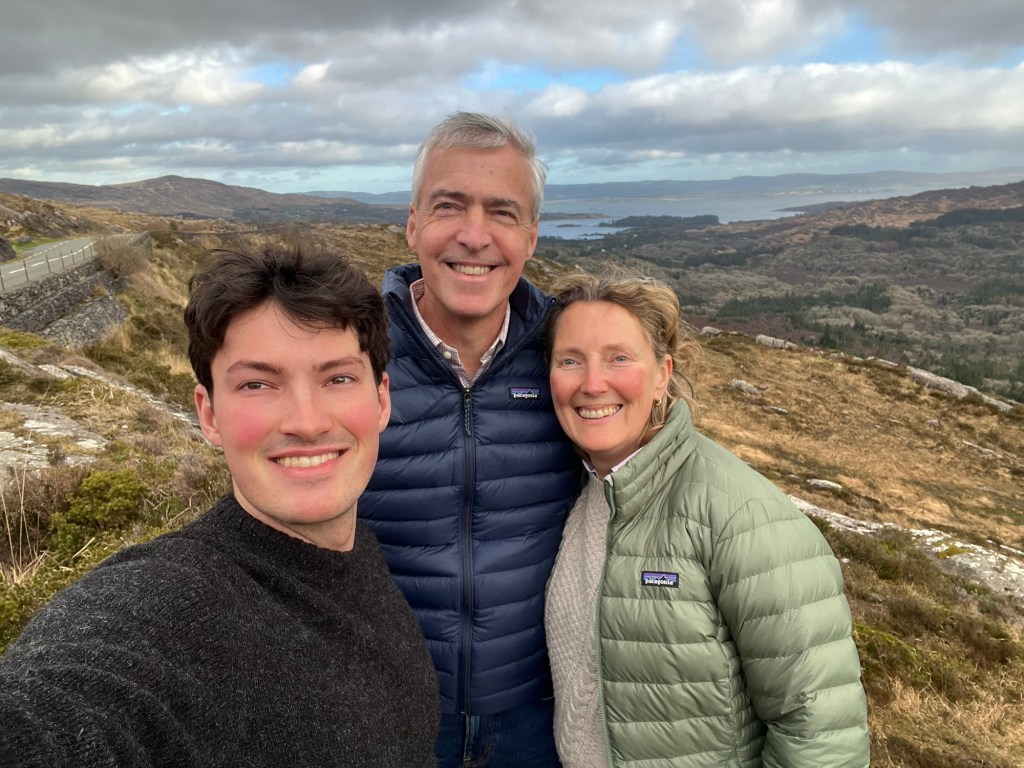
A rare sunny day, and I am with my parents. We meander through the blots of people on Camden street. There is a sweet smell in the air and the old brick facades look their brilliant best. Bubblegum pink petals peek from cherry blossom buds as the long, wet Dublin winter relents to an overdue spring. There is a bookstore on Camden street with a bright red storefront. It sells used books with tattered covers and obscure titles, alongside contemporary classics. It sells ten editions of Ulysses. Not many are sold. Most are piled like stalactites to be admired, and that is enough because they are old and lovely. Sometimes a man or woman will stop for a book of poetry on ants; a child will be arrested by a picture book of jet planes. This is the joy of it all, for the shopkeeper in his paper castle: what treasures people find, and what they reveal about their buyers. He is a well-read and knowledgeable man, and as we pass through his shop, as we step into the back courtyard, we do not glance his way and he does not mind.
Thursday:
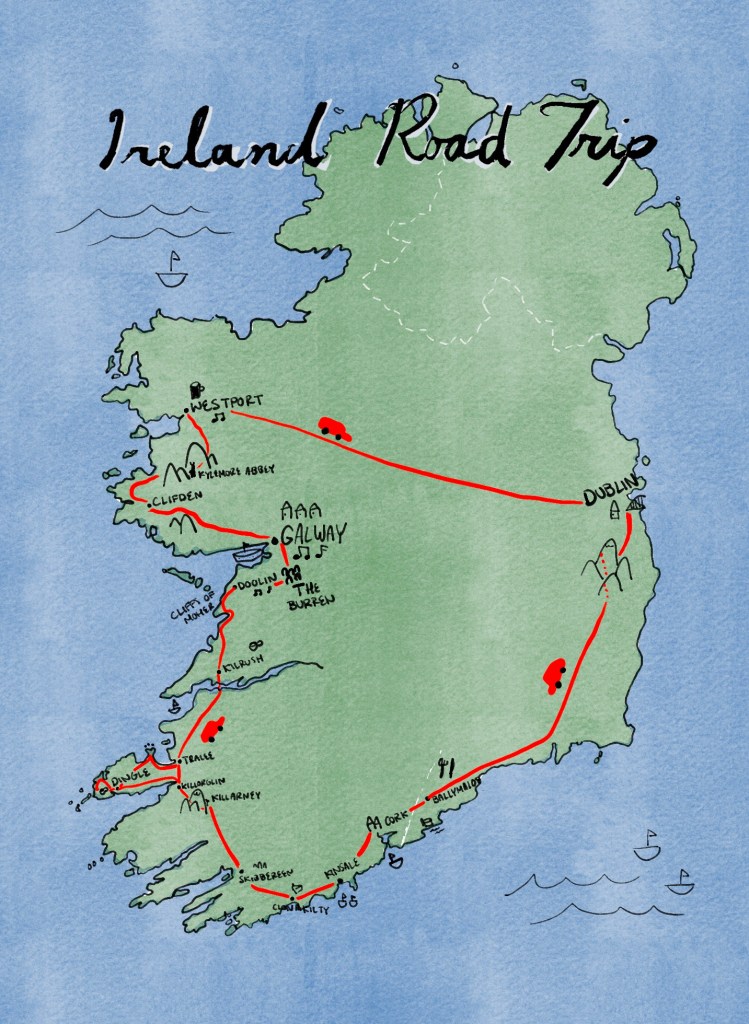
One good meal can make you whole again. Or that’s how I feel: whole, warm, sleepy. We sit at our table at Ballymaloe, a farm-to-table operation in East Cork County, and go over our day. We are reminded of the morning’s long drive through the wind and rain of the Wicklow Mountains, and how the fatigue was washed from our bodies as we plunged into the freezing seawater at Garryvoe. The waves were rough and wild, tumbled by a wind that chilled us to our cores. Our refuge sat at the water’s edge – a sauna where we sat, letting the eucalyptus steam detoxify us, sweat rolling down our noses. Thoroughly cooked, we ambled once more into the ocean and swaddled ourselves in hotel blankets. After a brief nap, we were greeted with cocktails in the Ballymaloe lounge. For dinner: a set menu, showcasing the best of Cork’s local produce, game and seafood. The Maraschino Cherry on top? A dessert cart, stock-full of carefully prepared dishes: ice creams, biscuits, and pies. A homemade seaweed pudding, served continuously throughout the house’s history. Our expectations far exceeded and our bellies full, we drifted on through the night.
Friday:
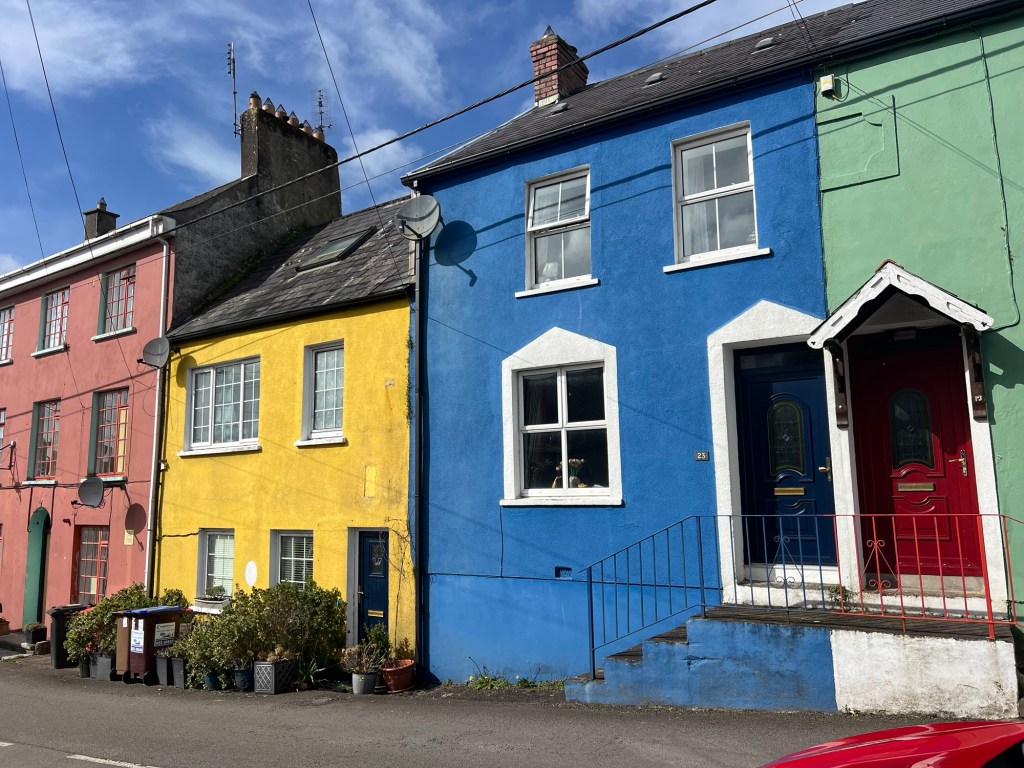
The drive from Cork to Killarney can be completed in two and a half hours – if you prioritize efficiency. If, however, you prioritize hidden harbor towns with buildings painted the iridescent hues of gemstones, or rolling fields stitched together by winding country roads, then you’re better suited on the N71. In the late morning we fueled up on coffee in Kinsale, a picturesque town due south of Cork city. Between its boutiques and brilliant facades, this cozy village radiates a unique charm. It is a place that feels comfortable with itself, as if it was always there. For an hour or so, we meandered down back alleys and along the waterfront, past the white hulls shimmering in the harbor. An hour past Kinsale lies Skibbereen which, in 1845, was at the heart of the Irish Famine. In March of 1847, Rev. Richard Townsend wrote of the state of the town in a public letter:
“it was a low rate to say 35, or from that to 40 deaths daily, exclusive of the deaths in the workhouse, which were declared to be 65 for the last week!”
The British government established these “workhouses” as a means of offering labor to poor Irish countrymen, and the conditions were appalling. The houses were overcrowded and disease was rampant. Families entered for the promise of basic food, shelter, and a proper burial.
“As to the numbers in this workhouse compared with originally intended power of accommodation. There were reported to me yesterday 1449 in the house built for 800!”
The Reverend’s letter was a call to action, and highlighted the callous indifference of the British government. It encouraged welfare programs, an end to the pitiless trade practices at the heart of the Famine, and eventually succeeded in supplying some relief to the southwest of Ireland.
Less than two hundred years on, Skibbereen is a town much like any other. It has its restaurants, music venues, markets, museums, and guest cottages. The Skibbereen Heritage Center, with its dirtied relics and faded memories from generations past, does the important work of reminding us what stands to be lost.
Saturday:
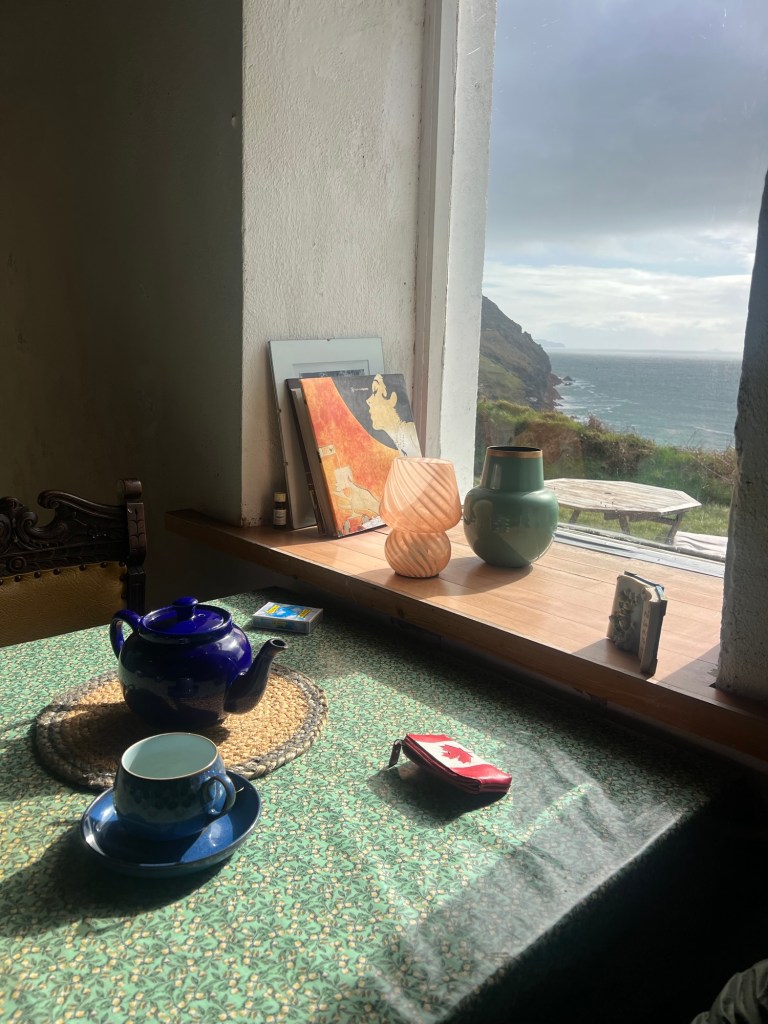
It’s the early afternoon on the Dingle peninsula. The sun is high and, far from here, rain clouds pummel the jagged peaks of the Skelligs. Somewhere on the isolated hardship of those islands, monks stowed themselves away in beehive huts for years of devoted prayer and study. I consider this as I sip my Barry’s Tea. We are sitting on the bright terrace of a small café on a cliffside road. The café is more of a cottage than anything; the woman who runs the place cooks out of her kitchen, sleeps upstairs, and hosts guests on the plush leather couch in her living room. There is a piano, a guitar, and sheet music for Joni Mitchell’s “Free Man in Paris.” The woman sells a small assortment of baked goods and takes pleasure in conversation. Across the dirt road, a pair of black-faced sheep peer dull-eyed over the barbed fence. The wind stops. The steam rises from our tea in thick currents, and we stay for a while.
Sunday:
I don’t spend many nights out with my parents, but when I do I sometimes learn something new about them. At McGann’s Pub, a small joint in the town of Doolin, not far from the Cliffs of Moher, I learned that my dad is a sucker for live music. Doolin has a reputation as a hotspot for trad music. Every February, thousands flock to this small town in County Clare for the annual Irish Trad Music Festival. Despite missing the festivities, McGann’s Pub was in high spirits. Nearly every seat was occupied, with smaller groups standing, stretching to see between shoulders. The band was warming up in the corner, and a newlywed couple leaned into each other, smiling drunkenly. We found a booth and sat with our whiskeys (and for my mom, a Chardonnay), listening as the band erupted into song. We stood for a better view, watching the strike of the fiddle, the crush of the accordion, the whistle of the flute. After some time I sat down with my mom and we gazed forward at my dad, still standing but not standing still, swaying with the music and with a giddy smile on his face.
Monday:
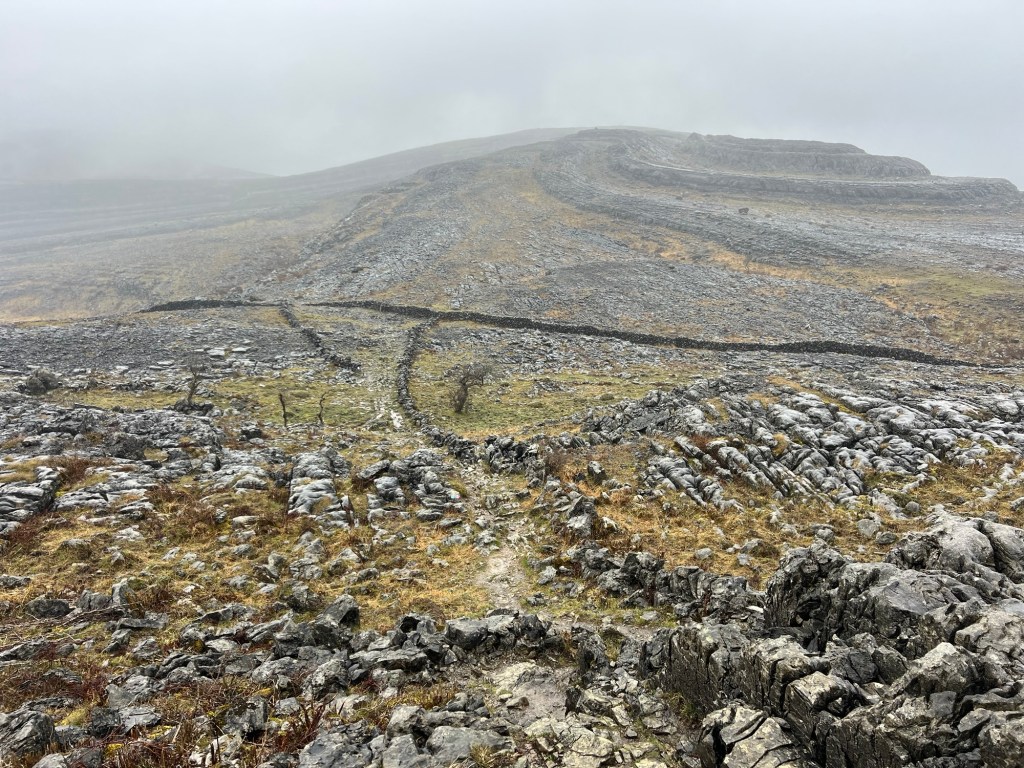
The people of County Clare are sometimes called “wild” and, sure, it takes a certain ruggedness, a certain vigor, to live in this part of the country. The earth is rocky and windswept, like a place out of Grimm’s Fairy Tales. The county boasts some of the Emerald Isle’s most unique landscapes; not an hour’s drive from the crowded Cliffs of Moher, there is a gem. It is an entirely otherworldly place, where trees sprout from limestone bluffs like weeds, out of place. It is called the Burren (from the Irish Boíreann, or “rocky district”). On this misty Monday morning, the Burren seems perfectly in its element: dark, harsh and mysterious. From the trailhead the peak of Mullaghmore is obscured by clouds, but its unique geology is immediately evident. The black hill looks more like the scaly back of a large lizard, and rises in spiraling ridges, as if flattened by some celestial anvil. The hike is easy, if tedious. Rocks and roots jut from muddy puddles. The rain has made the path slippery. The peak is battered by wind and rain, which clears as soon as we make our descent. We are greeted with a view of the lunar landscape and the old stone walls of shepherds’ fields, long vacated. There earth is more rock than grass. If I were a sheep, I would find this hard living. As we descend, a pair of young children overtake us, followed by their father, hopping from stone to stone with a swift ease. We laugh and keep walking, slowly, in our rain-soaked boots.
Tuesday:
It’s St. Patrick’s Day in Ireland, and my mom and I find ourselves in the outdoorsy town of Westport, north of Galway. Our day has taken us through the Connemara mountains and a small town parade in Clifden – a procession reminiscent of the Labor Day parades of my American hometown. By 9PM we are tired and full, lumbering out of a French restaurant called An Port Mór. There isn’t much on my mind besides sleep, but across the way is a pub called Matt Malloy’s, and three separate people have recommended it, and it is St. Patrick’s Day, after all. What’s the harm? The street outside is dead quiet, but inside Matt Malloy’s is a whole village of people, young and old. Walking past the bar, the sweet sounds of trad music waft through the doorway. A young lad comments on how it’s a “quiet night.” If this is quiet, I wonder what busy looks like. As we stand shoulder to shoulder, listening to the trad music, an older man sits and whispers something in the ear of the fiddler. He’d like a turn. Reluctantly, the fiddler obliges. The noise that leaks from the man’s mouth is more of a moan than a tune. He plays tenderly and sings with the cadence of a mummy, rising from his sarcophagus. My mom and I are getting drowsy. Around this time, I notice a steady trickle of people flowing into what I took as the restroom. Curious, I follow and, rather than a restroom, the door opens up to a large courtyard. There are easily two hundred people in the crowd and, smack in the middle, is a rock band. Standing to the side, my mom joins me and we are pulled in by the energy. The keyboardist rocks his long hair; the electric guitarist has his face screwed up in concentration; the fiddler is swaying, playing with incredible speed and a smile on her face; the lead singer, gathering his breath, belts out a jaw dropping falsetto. From 70’s disco to 80’s rock to 90’s classics, they touch every base. The clock strikes midnight, and then one AM. We leave our fatigue behind.
Wednesday:
Today, the week has caught up with us. We are back in Dublin, on Drury Street, sitting and enjoying a glass of wine and a charcuterie board. The sun is setting later every day, and the six PM light is golden. Around us, the shops are starting to close. The George’s Street Arcade has shut its gates and the customers spill onto the street. Before our final dinner, with nothing left on our agenda, the stillness feels wonderful. We savor the last drops of wine, working our way through our week, making note of the small things. Before long, it’s time to go.