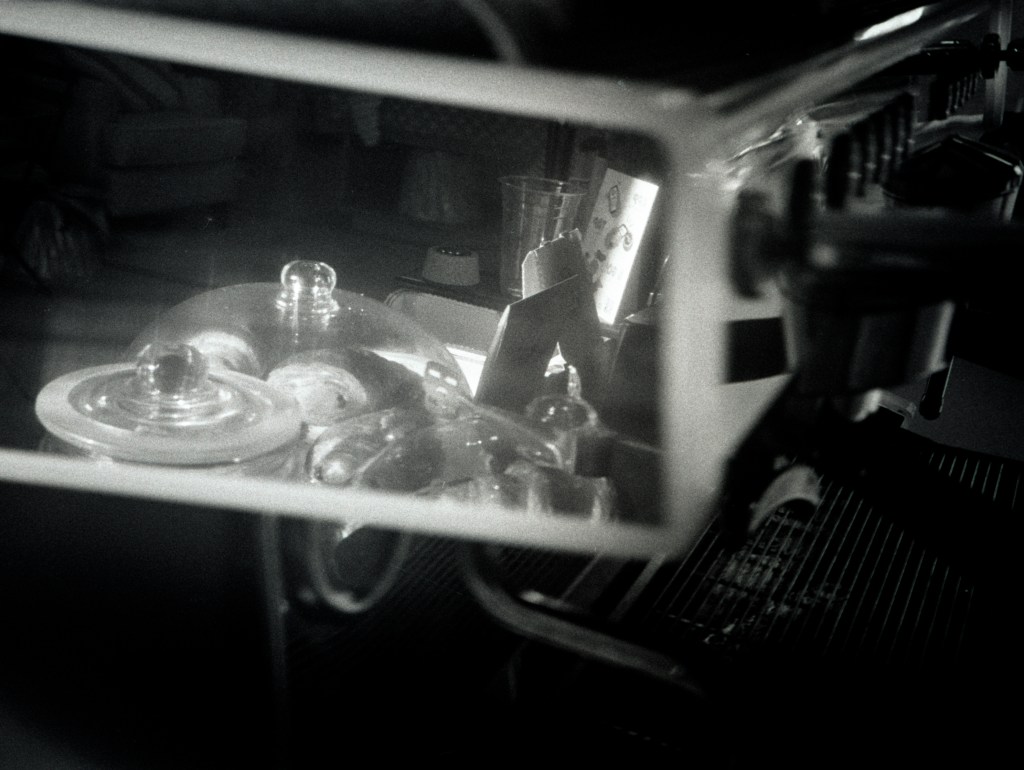
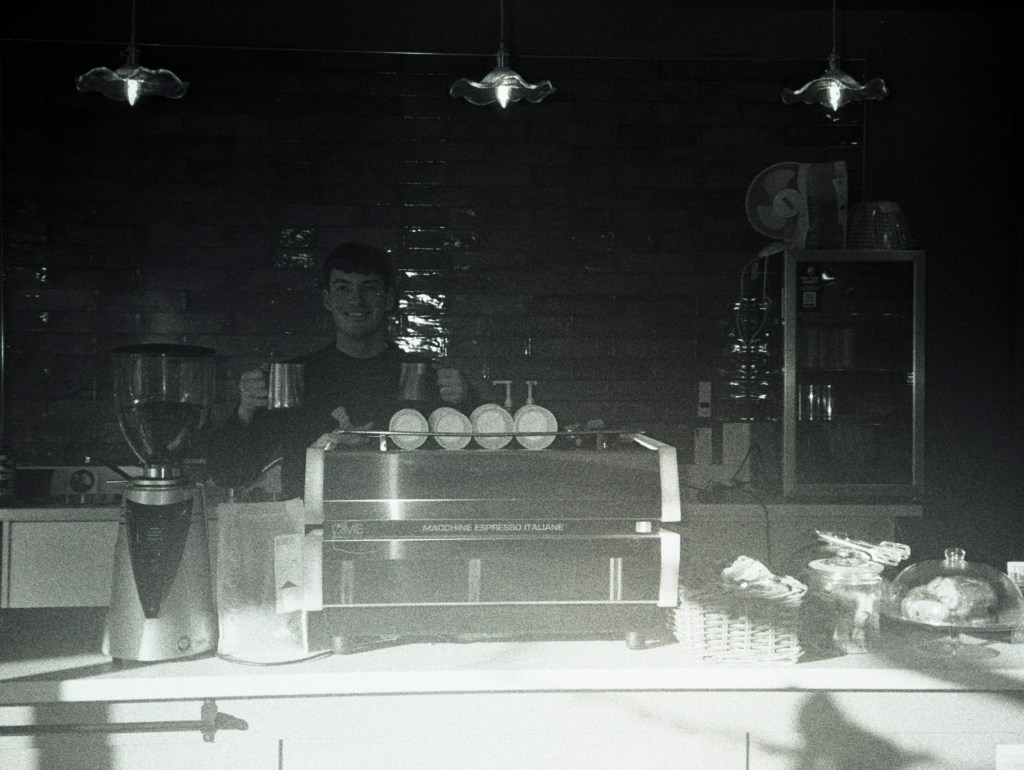
I’m writing this piece from the faux-marble countertop of a small café in south Dublin. For the past couple of months I’ve worked as a barista, serving up steaming cups of morning slurry to our small but loyal customers. The job is simple enough – open, greet, steam, pour, restock, clean, close. And hey, the boss doesn’t mind me writing up blurbs like this in my free time, bookmarking travel plans on Google Maps, or sneaking pastries from the front cases. I have lots of free time to think about my next steps, draw up a vision board, polish masters applications, and muse about where the summer might take me. Early mornings, free coffee, snacks, no trouble.
Most of the real baristas I’ve met are nuts about coffee. Some are great company, and others less so. They can be seriously strict about their go juice; think Paul-Giamatti-in-Sideways levels of fussiness. I say real baristas to refer to baristas for whom pulling espresso is not just a job but a passion. They live and breathe the stuff, at double speed, and have probably tried to convince you to buy a V60. And I should clarify, not all real baristas are over-caffeinated bean junkies. A great many baristas have made a career from it and maintained their humanity. I have known some coffee-averse baristas who, having survived the venomous grip of caffeine, have sworn it off altogether. Even the most hardcore, uncompromising coffee specialists deserve a certain amount of forgiveness.
Real, specialty baristas, as obnoxious as they might be, are necessary. It can take the pointed glare of a coffee wacko, sniffing and spitting at your morning cup of joe, to see that maybe, just maybe, you deserve better coffee. Sometimes we can get too familiar with slurping our cup of whatever. Take nothing away from a classic batch brew; there’s something irreplaceable about a steaming mug of muddy water, tapped straight from the well of your local diner. Espresso-drinkers will look down their noses at filter coffee, even as it remains great-tasting and dirt cheap. And hey, maybe I’ve been watching too much Twin Peaks, but there’s something distinctly American about batch brew that makes me ever so protective of the stuff. Even so, there is a wide world of beans, roasters, grinds, and brews out there, and we rely upon those caffiends to open our eyes. For instance, in my café, we serve Cloud Picker beans. Roasted in outer Dublin, Cloud Picker coffee is smooth and tasty. The particular bean we serve is enigmatically called “Sam” and delivers notes of milk chocolate, pecan, and vanilla.
I took a barista training course upon my arrival in Dublin so, being versed in coffeespeak, I can tell you that a specialty barista will look at the flavor profile of Cloud Picker beans and say two things: one, the bean is probably from Africa. two, wait no maybe it is South American. It gets complicated. The taste of coffee differs with its origin, and with the method by which it is roasted. A real barista will chew your ear off about this.
Seeing as I am, and I stress, a casual, non-real, non-specialty barista, and obviously find none of this interesting at all, I won’t get into the specifics. That being said, I’d like to explore Ireland’s coffee habits. Much has been said of coffee production and its ethics, with sustainability, fair pay for farmers, and gender equality serving as three hot button issues.1 Coffee crops thrive in ecosystems that are currently under threat, with sixty percent of wild coffee species at risk of extinction; farmers are paid pennies per pound produced; women provide seventy percent of labor but enjoy far less benefits than their male counterparts. Despite the mess, an overabundance of often contradictory ‘fair trade’ organizations has muddied the waters and facilitated industry-wide abuse. It can be hard to say which of the 1,226 fair trade organizations to refer to and, with global coffee production expected to triple by 2050, this is a serious issue.2
In Ireland, a coffee renaissance has taken place. According to Java Republic, nearly half of Irish adults say they drink more coffee than they did a decade ago, with 25 percent reportedly drinking up to four cups per day, and more than half of coffee drinkers asserting that quality is of higher importance than cost.3 McCabe’s Coffee claims that environmental sustainability is now an essential component for vendors, and that consumers have raised their expectations for specialty coffee.4 Organic coffees, meanwhile, have exploded in popularity. As Ireland consumes more coffee and demands a sustainable product, the onus will be on the vendors, roasters, and transporters to ensure a transparent and just process, from farm to mug. The clear Cloud Picker bag in front of me has a “this bag saves” stamp, claiming to “ensure that all of our orders have a positive effect on the world!” Next to this, it reads “Made from 83% post consumer recycled material” and nearly shouts: “Recycle me. Please place me in the recycle bin after use.”
Sitting on my little stool, gazing forlornly across this Dublin parking lot, I am at the palpitating heart of the Irish Coffee Renaissance. A returning customer, breaking my train of consciousness for the third time today, tells me that this stuff is mighty popular. Looking past the specialty coffee bag, pleading its sustainability, its ethics, as though atoning for some sin, I see the plastic bags rolling past like tumbleweeds, the deathly black tail of a semi truck. It’s a messy, wired world out there, but if we’re all condemned to caffeine addiction, hell, we might as well be ethical addicts.
- Bean & Bean Coffee Roasters. 2023. “What Are The Ethical Issues Of Coffee?” February 9. https://beannbeancoffee.com/blogs/beansider/what-are-the-ethical-issues-of-coffee.
↩︎ - EconoLease. n.d. “Five Important Ethical Issues Facing the Coffee Industry.” Accessed January 11, 2026. https://www.econolease.com/blogs/resources/5-important-ethical-issues-facing-the-coffee-industry.
↩︎ - “Coffee Consumption in Ireland: Trends, Quality, and Ethical Choices.” n.d. Accessed January 11, 2026. https://www.javarepublic.com/insights/coffee-consumption-ireland-2025/.
↩︎ - “Café Trends in 2026: What Every Café Needs to Know.” n.d. Accessed January 11, 2026. https://mccabecoffee.com/blogs/stories-to-inspire-you/cafe-trends-in-2026-what-every-cafe-needs-to-know.
↩︎
 charlie deichman-caswell