Bananas are curious plants. They’re perennials. They’re tropical. They’re needy. They rarely bear fruit in colder climates, though when they do the fruit (technically berries) grow in a “hand” around the plant’s “heart,” or flower. Banana plants are the world’s largest herbs, and they grow in the strangest places. And so it is that, once a week, every week, for the past two months, while tending a small garden on a blustery Howth hilltop, I have come to admire the banana.
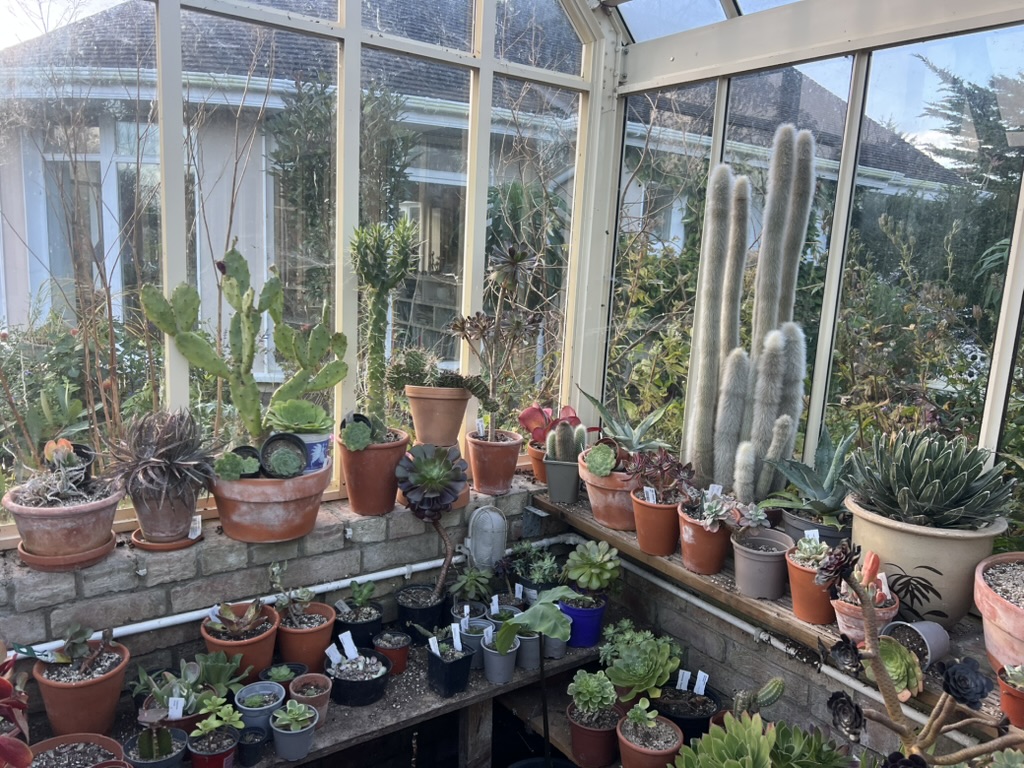
It began as a passing idea as I walked through Dublin’s Royal Botanic Gardens. Gardening wasn’t entirely new to me – I’d spent many afternoons at Middlebury’s Knoll organic farm – but I had rarely felt such an urge to get my hands dirty. It could’ve been that I sought a way of connecting with the land, or a new community, or a means of learning about small-scale horticulture as I considered a career in an environmental field. Regardless, I entered the Botanic Gardens’ cactus exhibit and approached a woman named Ita standing atop a step stool, monitoring a small pink flower.
Here, then, is one of those rare moments of alignment, when just by asking the right question to the appropriate person, an opportunity comes forth. The woman in the greenhouse, upon my asking Do you take volunteers? smiled and shook her head, paused, and asked for my name and contact details to pass on to a friend. I figured that I was out of luck. It was worth a try, in any case.
Four days later, I received an email from Nuala and Conall at Ardan Garden. They had received my contact and CV from a friend of Ita and asked me to come meet them in Howth. And so, thanks to a total stranger following through on an offer made in passing, I was introduced to my new garden mentors.
Now, to be clear, I am not an experienced gardener. Despite my many hours pulling weeds and transplanting spinach at the Knoll, I do not have a green thumb; at best, it’s a tired shade of yellow. A few years ago I adopted a perfectly healthy Monstera from my friend Nat and, after less than two weeks, it had shriveled and died. Since then, I’ve recoiled at the thought of raising plants, and yet something made me seek it out.
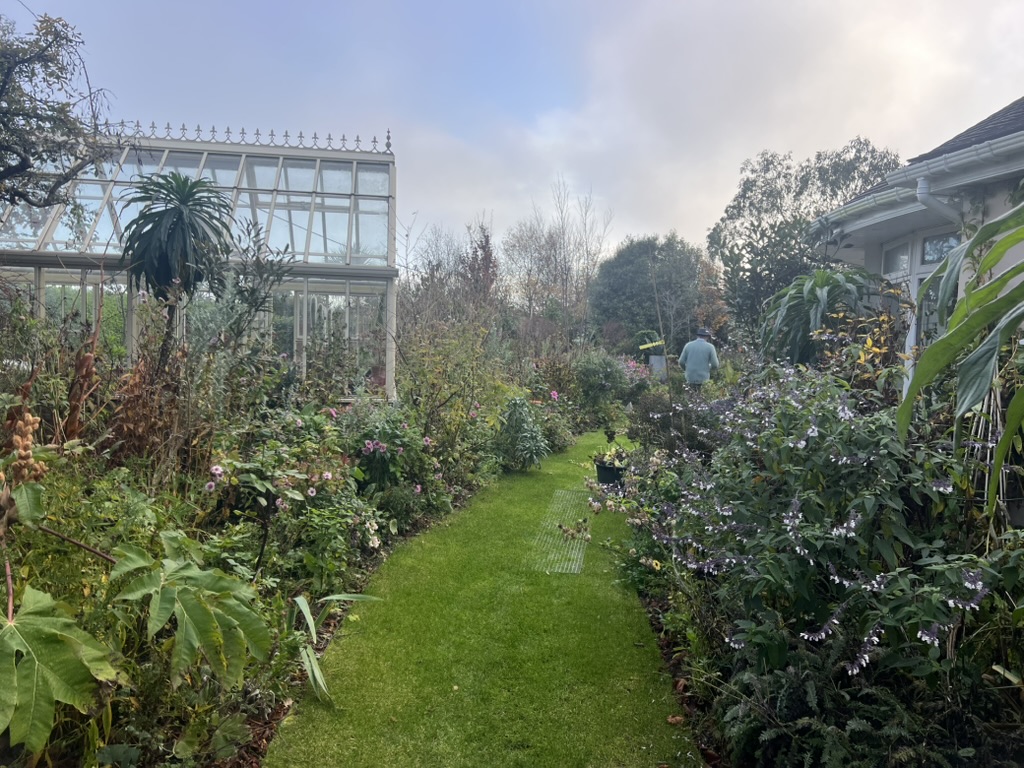
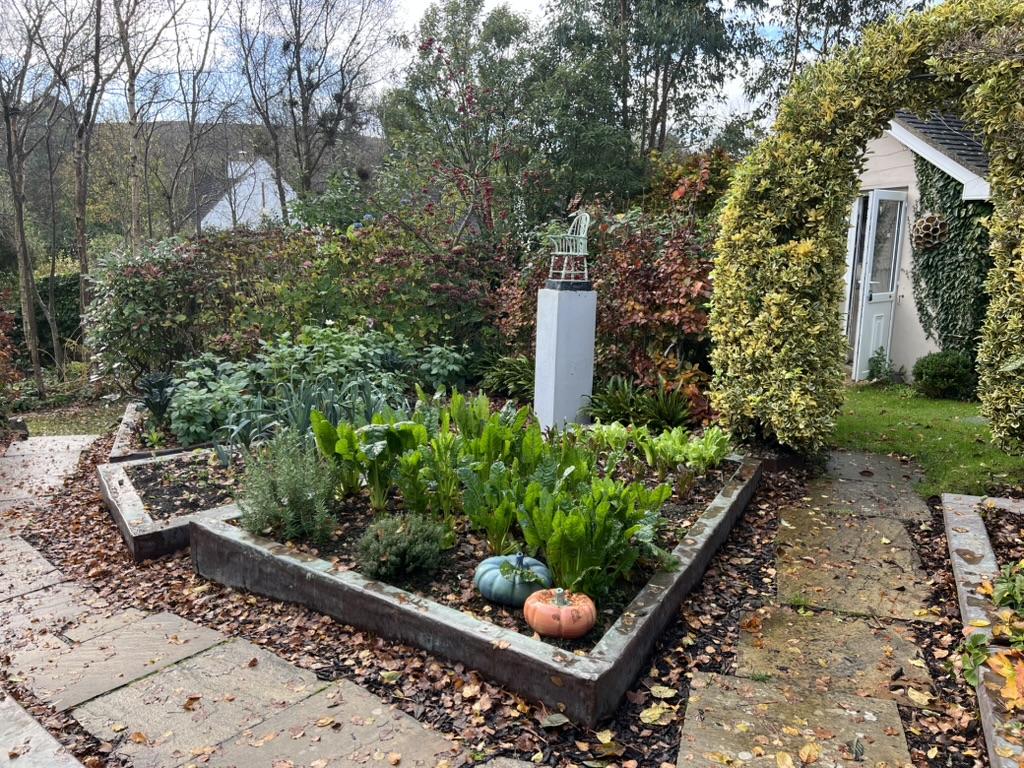
During the summer months, Ardán is a painter’s palette, a carefully orchestrated dance of blues, reds, yellows, purples. The flower beds are color-coordinated, and the garden itself is terraced into complementary yet distinct areas: dense herbaceous beds, a produce section, a white garden and an exotic portion, complete with a bog and pond for native Irish newts. Two separate greenhouses are reserved for nursing young plants and growing dry-soil aeoniums – trays of aeonium siblings sit where Conall has been experimenting with developing a new variety. Asters and lilies provide pops of blue and pink, like tufts of cotton candy.
In these warmer times the banana plant looms large, its huge leaves drooping over the pond like the beak of an egret, kissing the water’s edge.
In the winter, when the dahlias have receded and the chrysanthemums are long past wilting, the gardeners’ dirty work begins. This work includes tasks such as, but not limited to: trimming large herbaceous plants, pulling annuals, recycling and enriching soil, assessing the performance of each plant, deciding on new varieties, ordering and planting bulbs, transplanting, drying and storing tubers, labeling, or otherwise trying to remember what the hell you planted next to the viburnum.
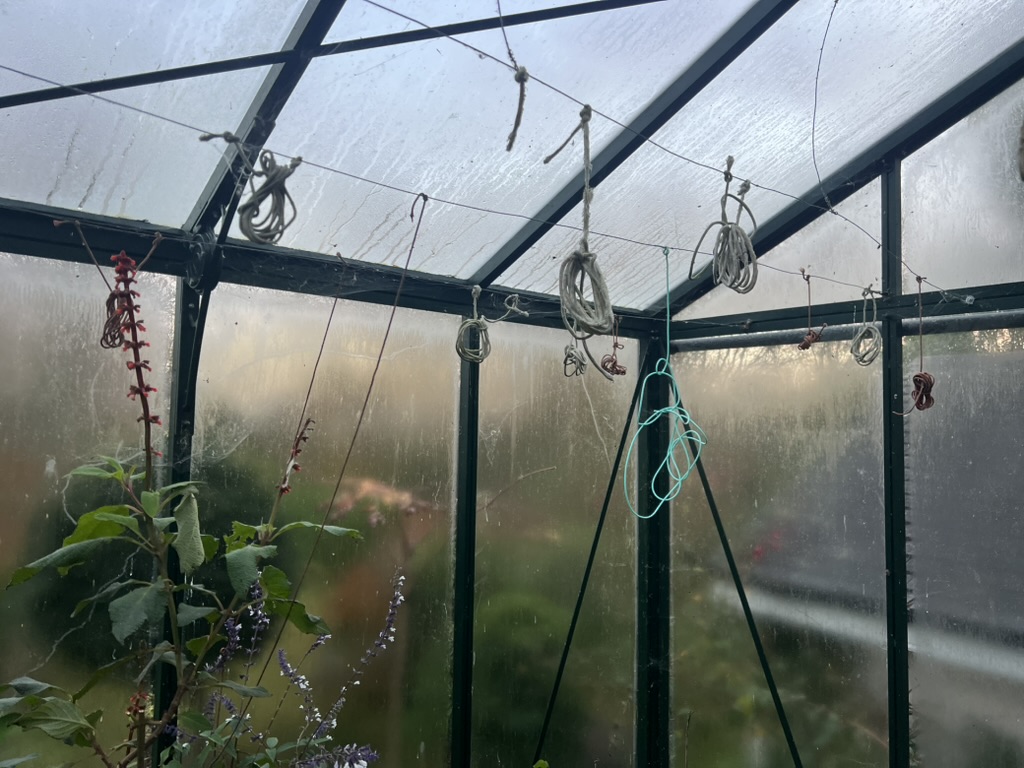
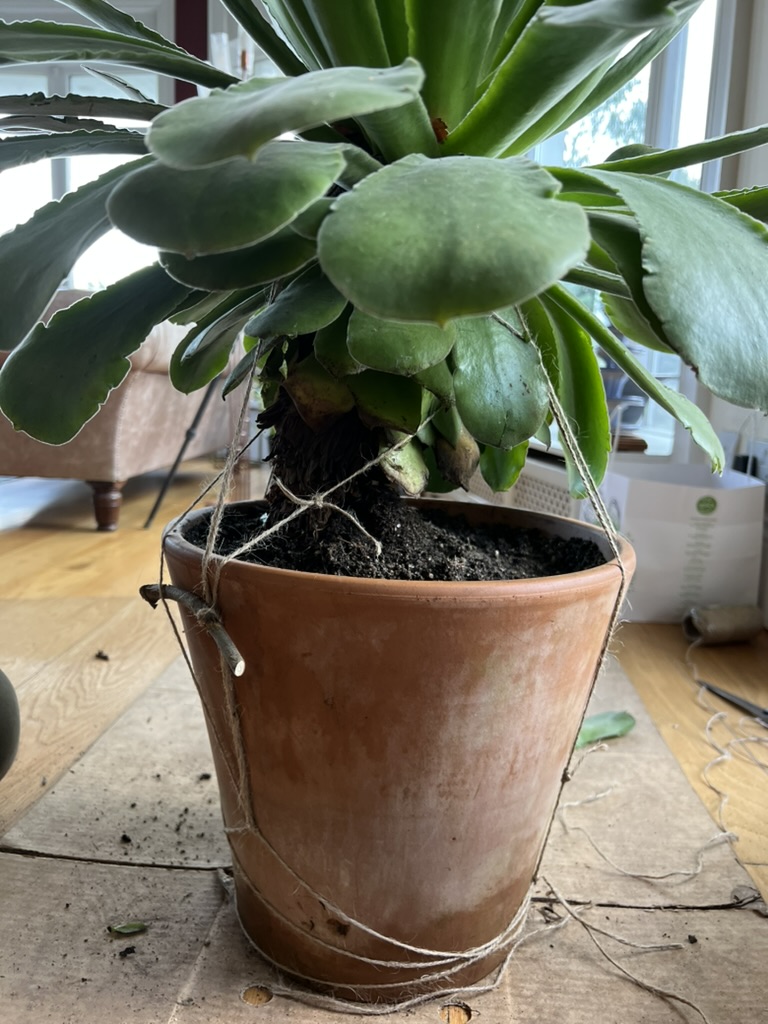
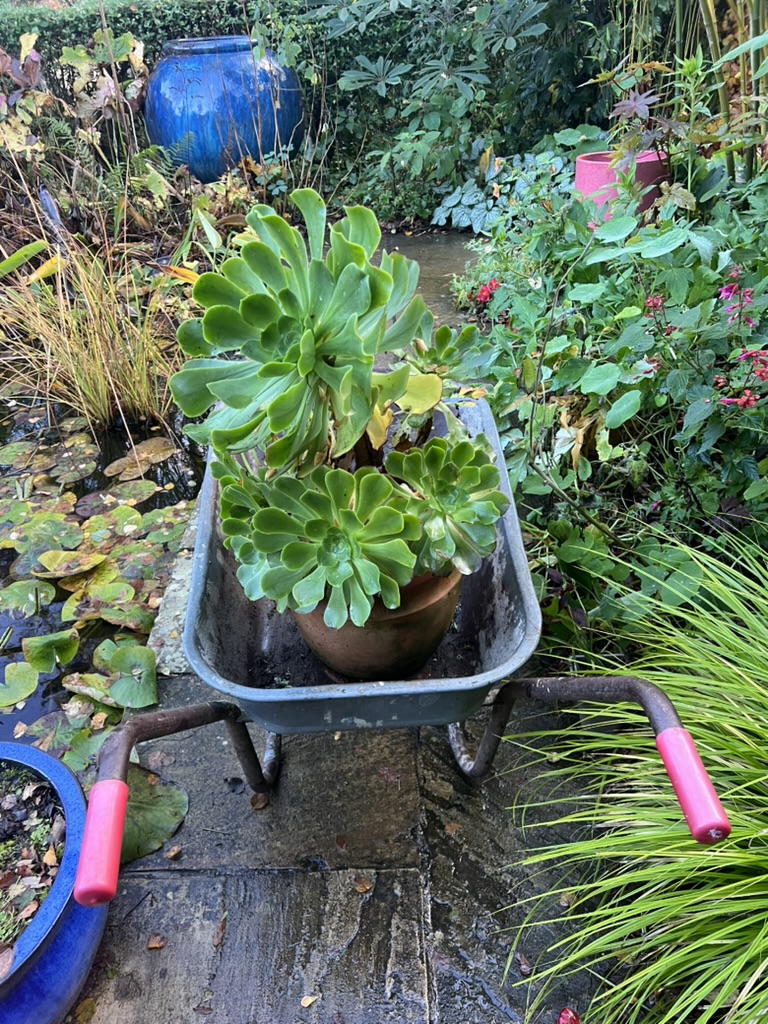
Nuala and Conall spend most of their time in the garden, and will not be deterred by inclement weather. The two carry on resolutely, often in complete silence, for as many hours as the day will afford them. When they aren’t gardening, their participation in local groups highlights the role of gardening as a unifier in Howth and the greater Dublin area. They attend talks with horticultural organizations, and spearhead charitable committees. They visit their friends’ gardens, often exchanging uncommon plants.
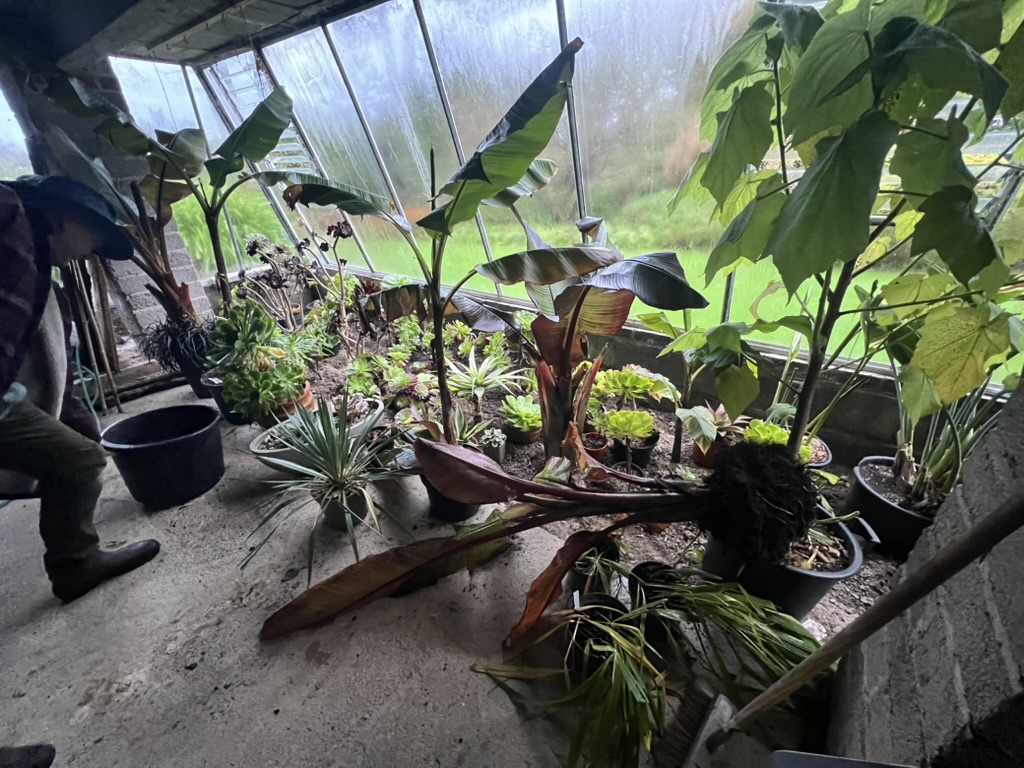
The banana plant recedes and may require trimming. To allow it to withstand the harsh Howth winter, Conall wraps it in sheets of fiber, leaving enough space for the plant to breathe but wrapping tightly enough to keep it warm. Atop it he places a small pot, angled downward to allow the rainwater to slope off and onto the ground. If water is allowed to pool inside the banana, it will invite frost, rot and death. This is work that must be done.
Nuala spends hours browsing plant catalogues, and both she and Conall have dedicated many hours to learning the latin names of every species. Conall, in particular, has expressed to me his interest in the etymology of plant names – so much so that I have begun studying them myself. At Ardán, there is no sunflower, no daffodil. There is Helianthus annus and Narcissus poeticus. That big river birch towering over the purple bed? Try Betula nigra.
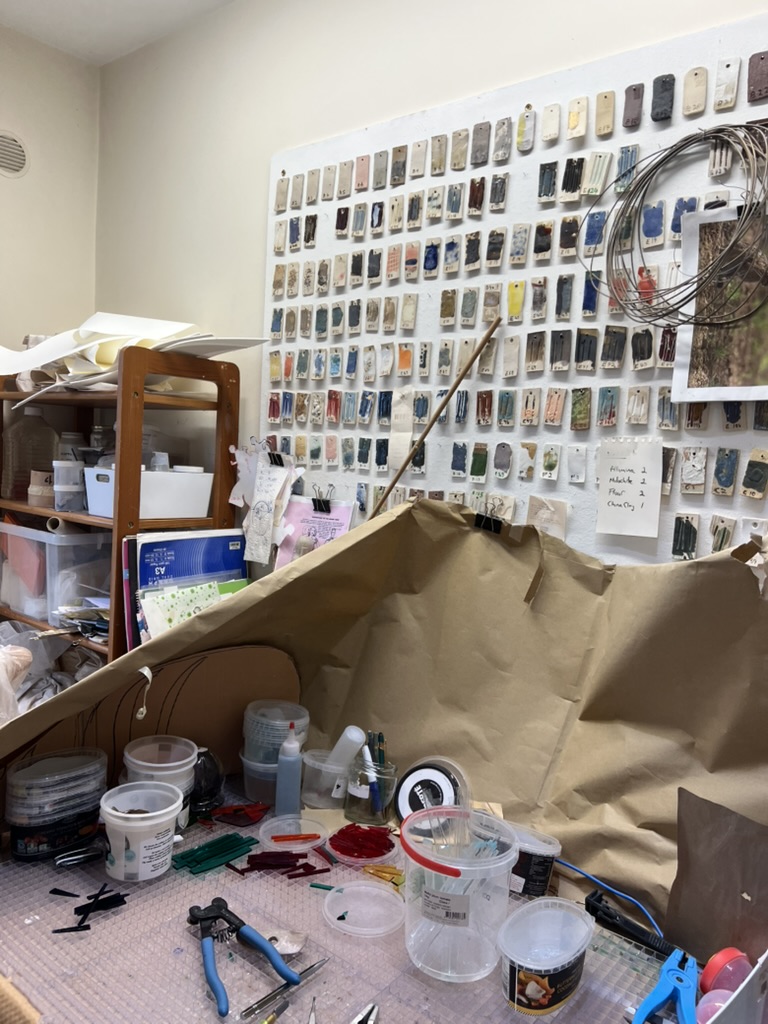
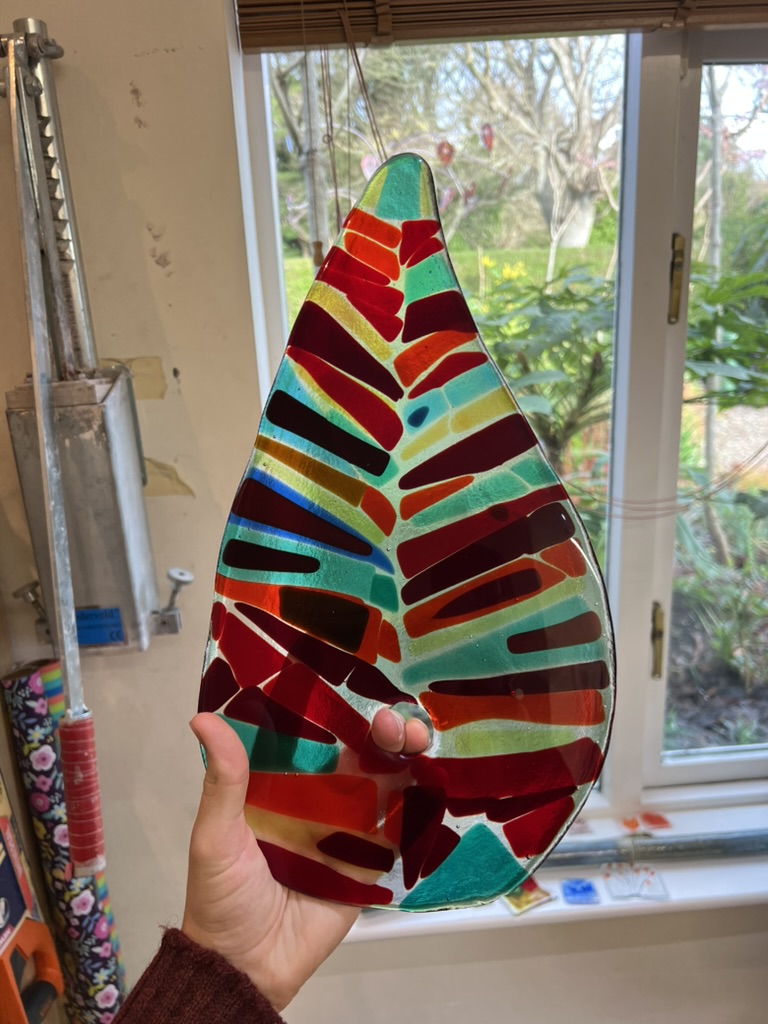
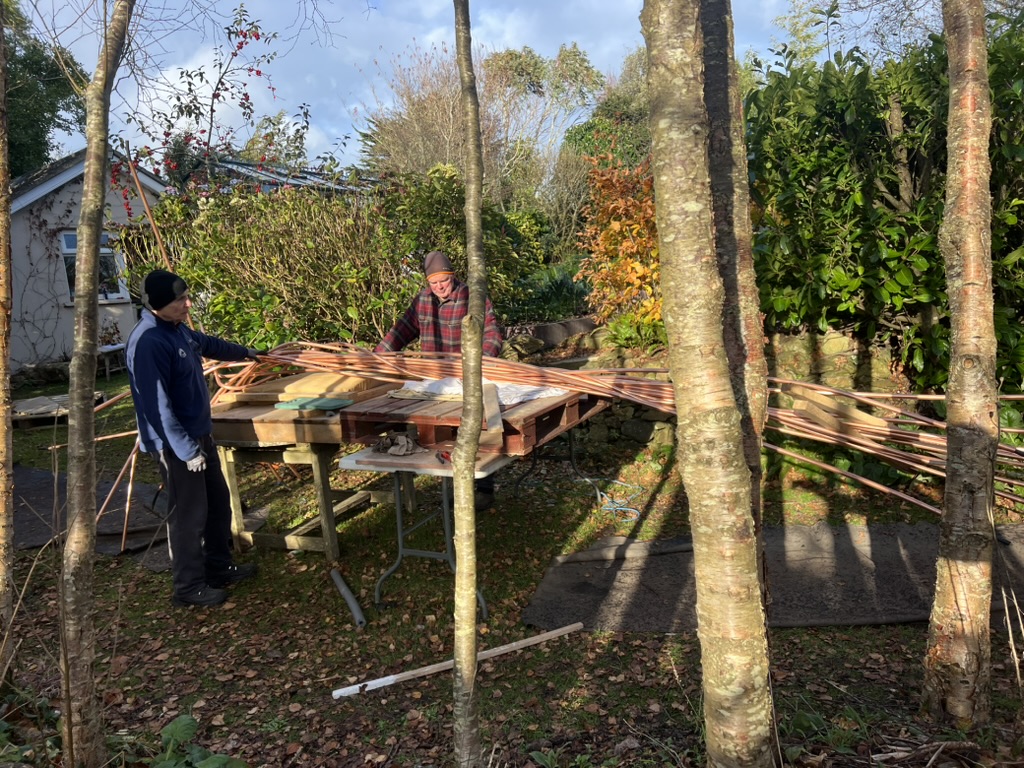
Spattered among the flowers are sculptures, crafted by Conall, shining like amulets of copper and glass. At his home studio, he shapes his creations from clay and metal, building molds and experimenting with colors. While I watch, he arranges vibrant glass shards into the shape of a leaf, and melts it together in a long, fragile process. On a Monday morning, I help him weave together copper pipes into the form of a tree trunk. From that point, he melds the glass leaves onto the ends of those lustrous branches – that particular sculpture, a replica of one made for the Royal Botanic Garden, was to be installed in a neighbor’s yard.
A few steps down the path, past the herbaceous beds, the banana plant stands tall. It shares space with a cedar tree, an unlikely neighbor. The cedar is rooted in a large pot and, like the banana, the cedar has been carefully considered. Everything in the garden has been pored over, every decision calculated, and yet it is an ecosystem. The trees and flowers support the birds, squirrels, newts. Nuala and Conall select those varieties of flowers with easily accessible pollen, to support the bees. These choices are important, as a part of sustaining the Dublin biosphere.
Working quietly among their carefully curated space, I have not only been learning about gardening, but how to connect with this new environment. Gardening has a way of making you feel rooted and centered, of making you notice the elusive small joys of the land. There is time to glimpse the robins and squirrels, to listen to the squawking gulls overhead. The labor is satisfying. It is, as Rebecca Solnit wrote in Orwell’s Roses, “vivid to all the senses, it’s a space of bodily labor, of getting dirty in the best and most literal way, an opportunity to see immediate and inarguable effect.” And even as a visitor, I look forward to coming back every week, to seeing the effect of our labor, and to learning from this wonderful space.
 charlie deichman-caswell