“There was a moment, when we were walking away from the crowd, when I got a sinking feeling in my stomach.” – Maisie
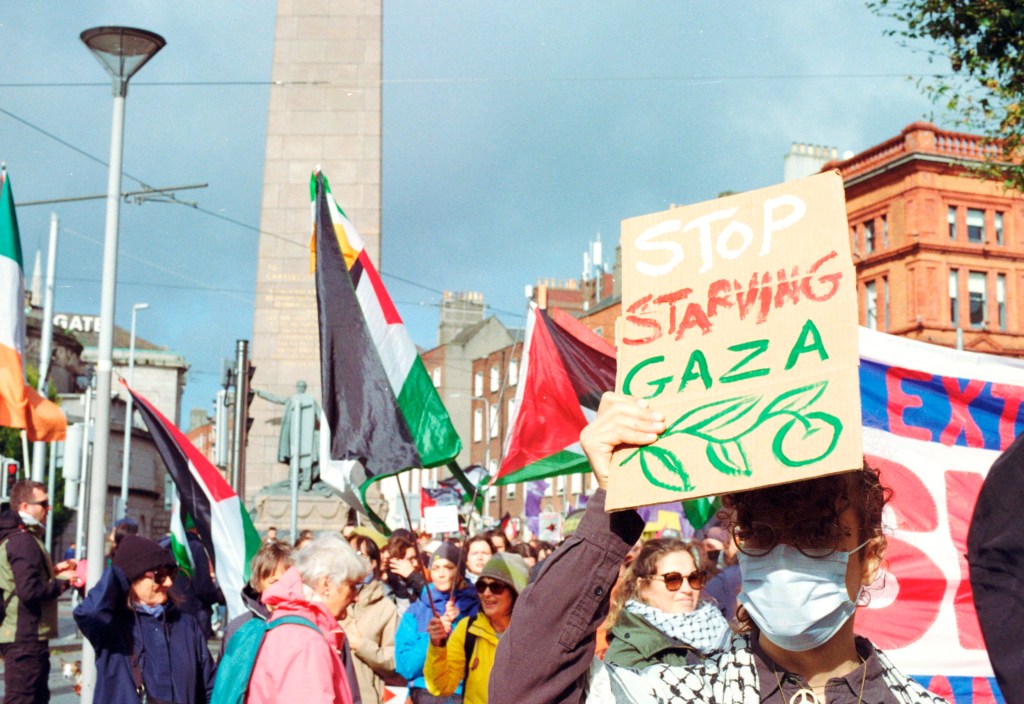
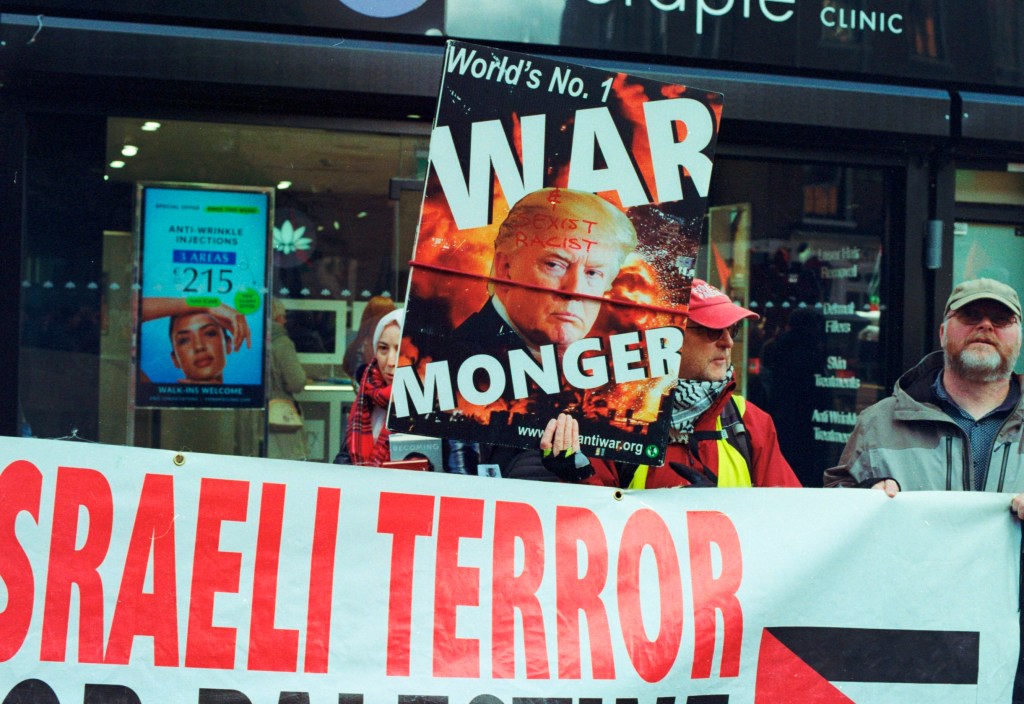
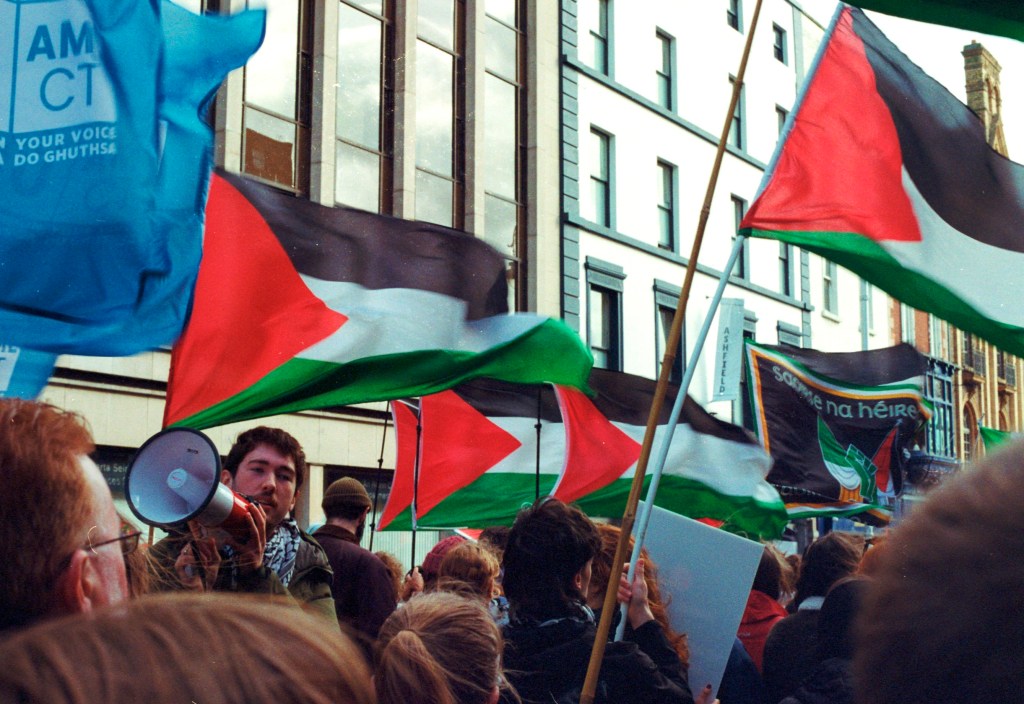
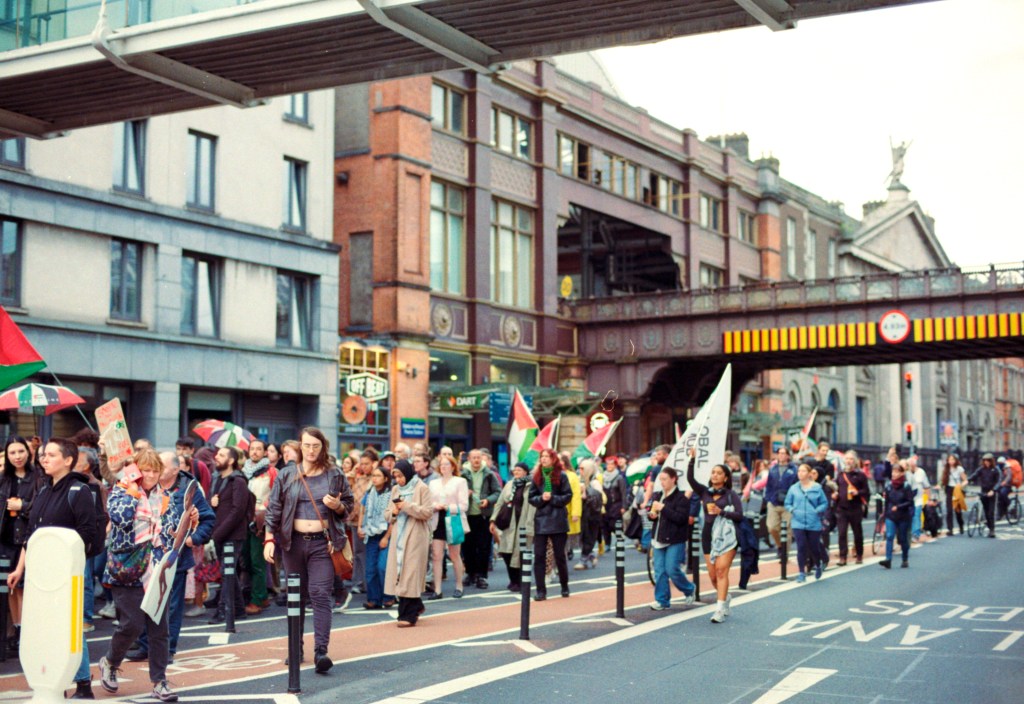
At midday, the rain came and left in a hurry, leaving only a blue sky hanging above the upturned chins of the more than 25,000 people who had gathered on O’Connell Street. A palette of green, black, red and white painted the air, and the chill of the morning subsided. Kids sat perched upon their parents shoulders, tugging at kifeyas. Hands grasped signs reading: US WARPLANES OUT OF SHANNON and END THE OCCUPATION; another depicted President Trump with the words WORLD’S NO. 1 WAR MONGER. Higher still, atop Dublin’s famed Spire, a Palestinian flag flapped in a violent wind.
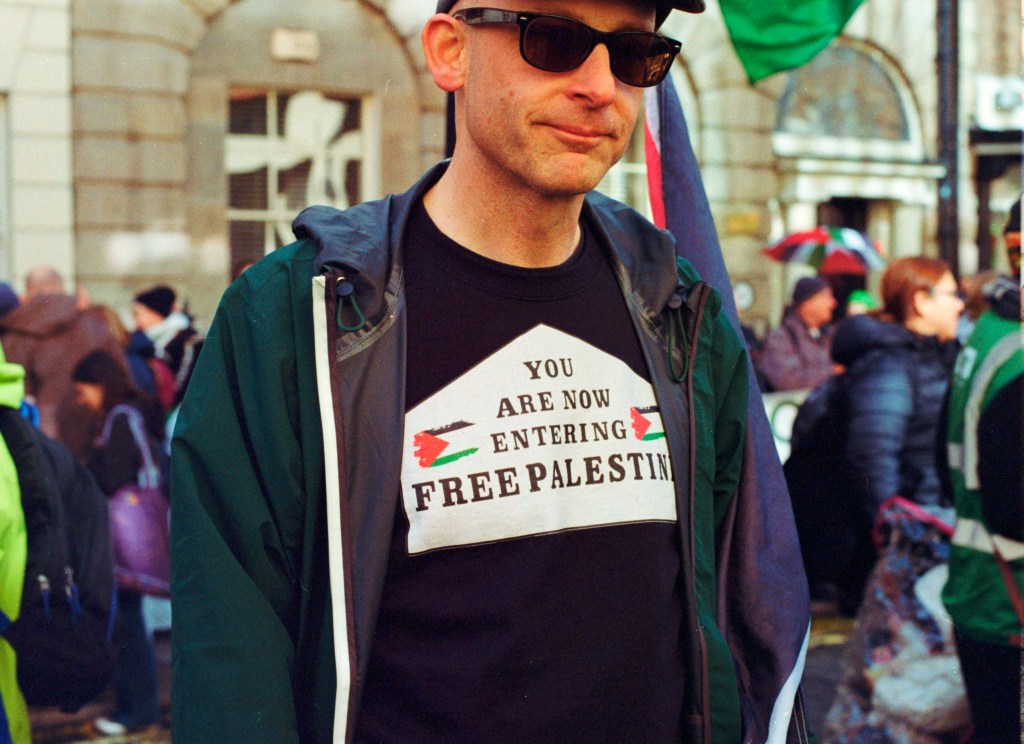
On Saturday, October 5, Dubliners of all ages flocked to the streets to protest genocide in Gaza and the role of the Irish government in facilitating the flow of weapons and goods to Israel. The march was organized by the Ireland-Palestine Solidarity Campaign (IPSC), a non-profit established in 2001 to “achieve freedom, justice, equality and return for the Palestinian people.” Protesters called upon the Irish government to sanction Israel, and came after the recent detainment of hundreds aboard the Global Sumud Flotilla, which was carrying aid to Gaza. The previous Thursday, an emergency protest had been called in response to the aid vessel’s detainment.
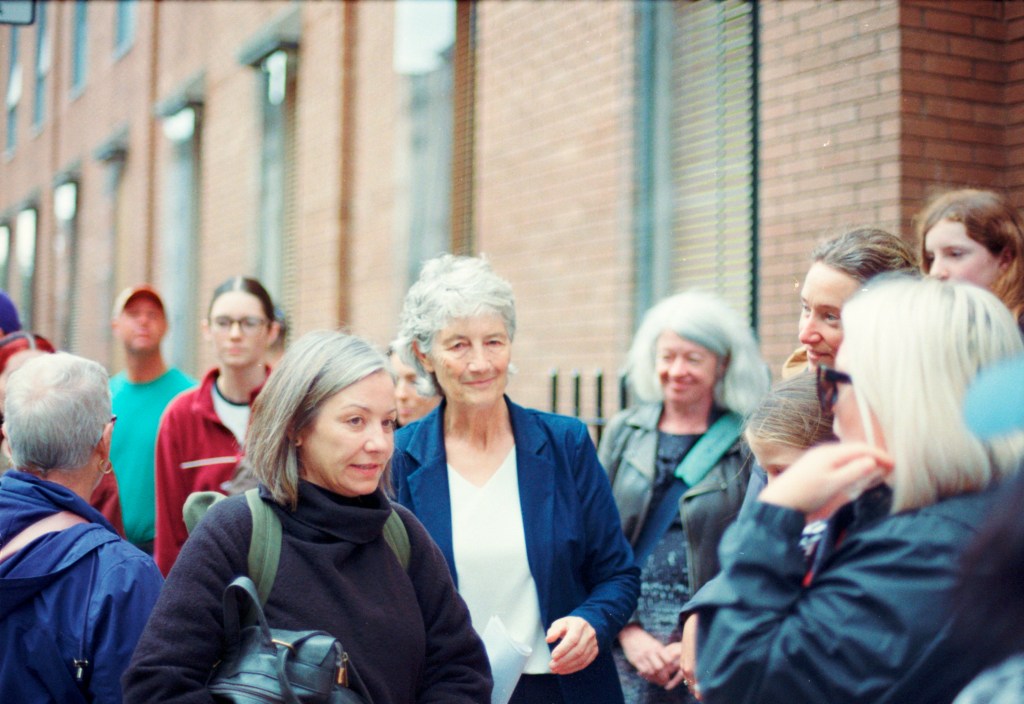
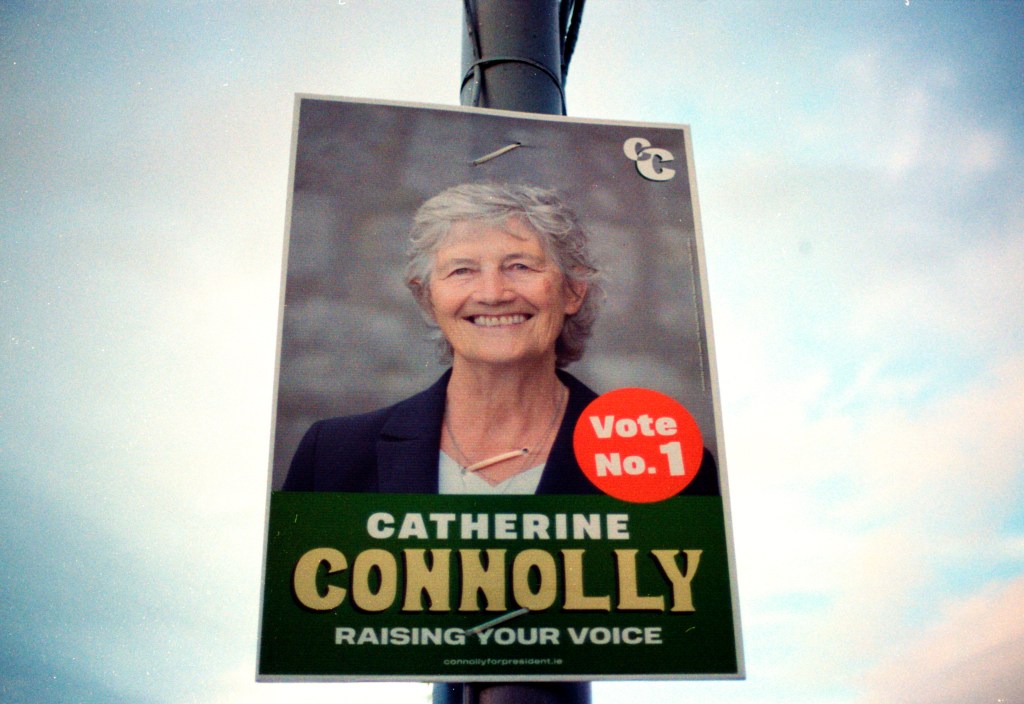
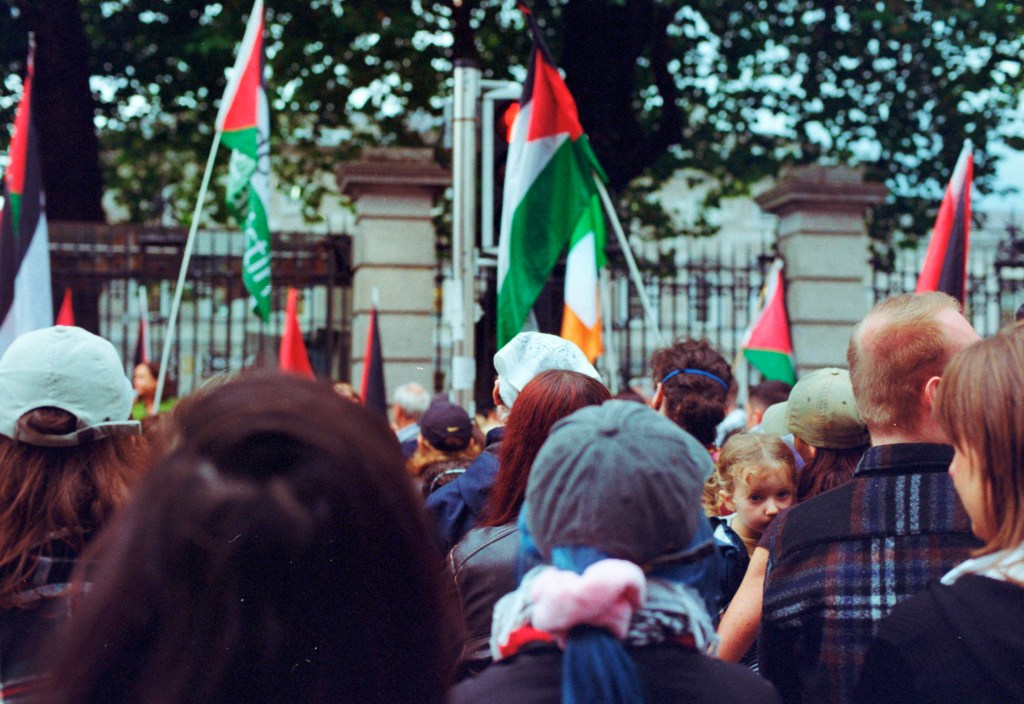
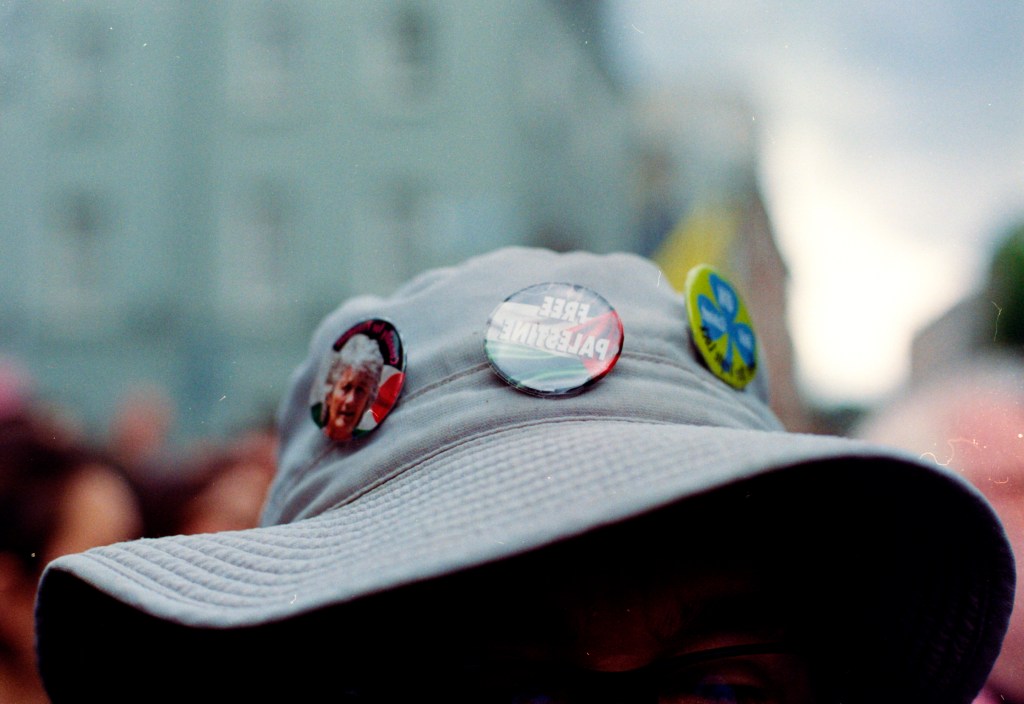
At around two o’clock, the protesters reached the Dáil. There, they urged lawmakers to pass the Occupied Territories Bill, a piece of legislation that would ban imports from occupied territories, including the Occupied Palestinian Territories. In recent days, US lawmakers have put pressure on Ireland to scrap the Bill, dismissing it as an “effort to single out Israel,” and “target the world’s only Jewish state.” The Bill, they warn, could damage American business in Ireland. American corporations, especially in the pharmaceutical sector, have a substantial presence in Ireland and employ thousands of Irish workers. So far, however, Irish lawmakers have shown few signs of reconsideration.
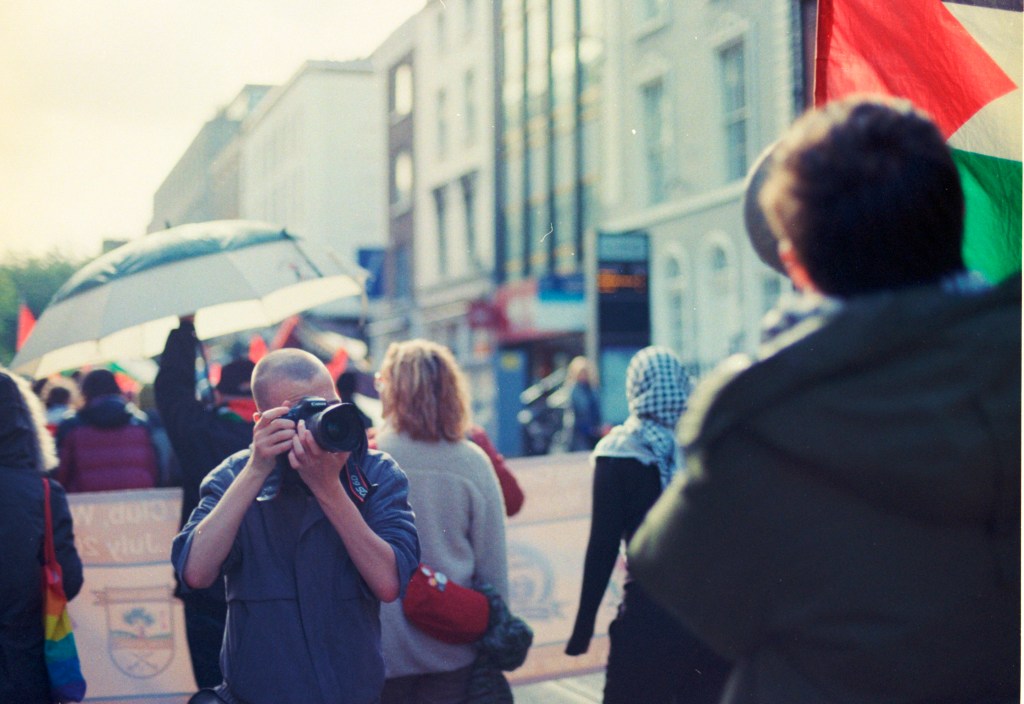
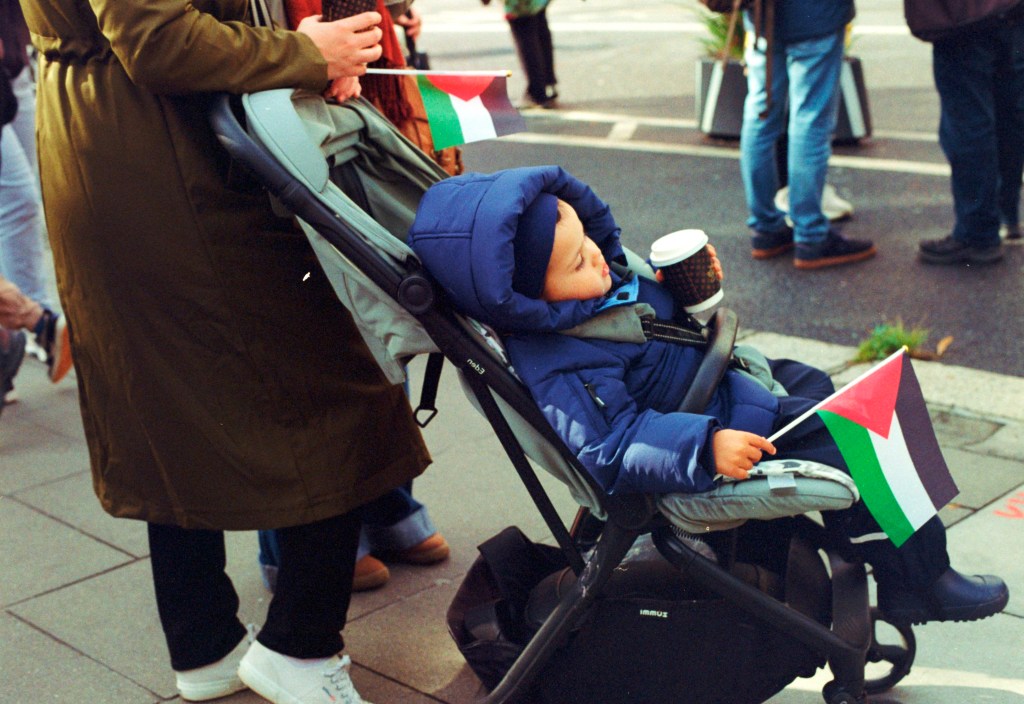
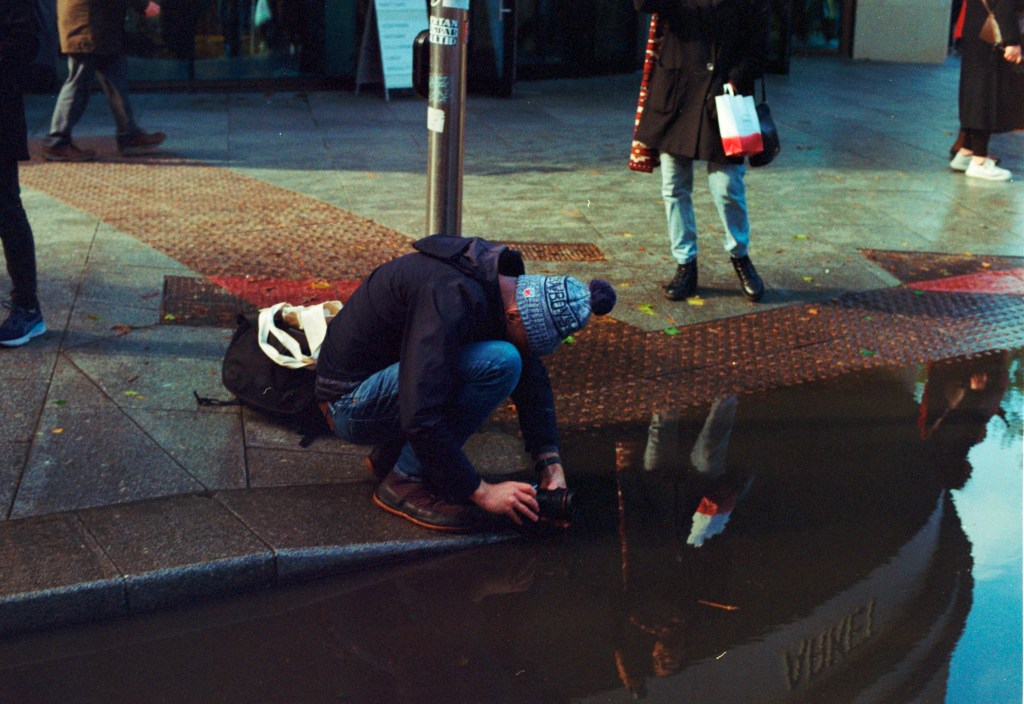
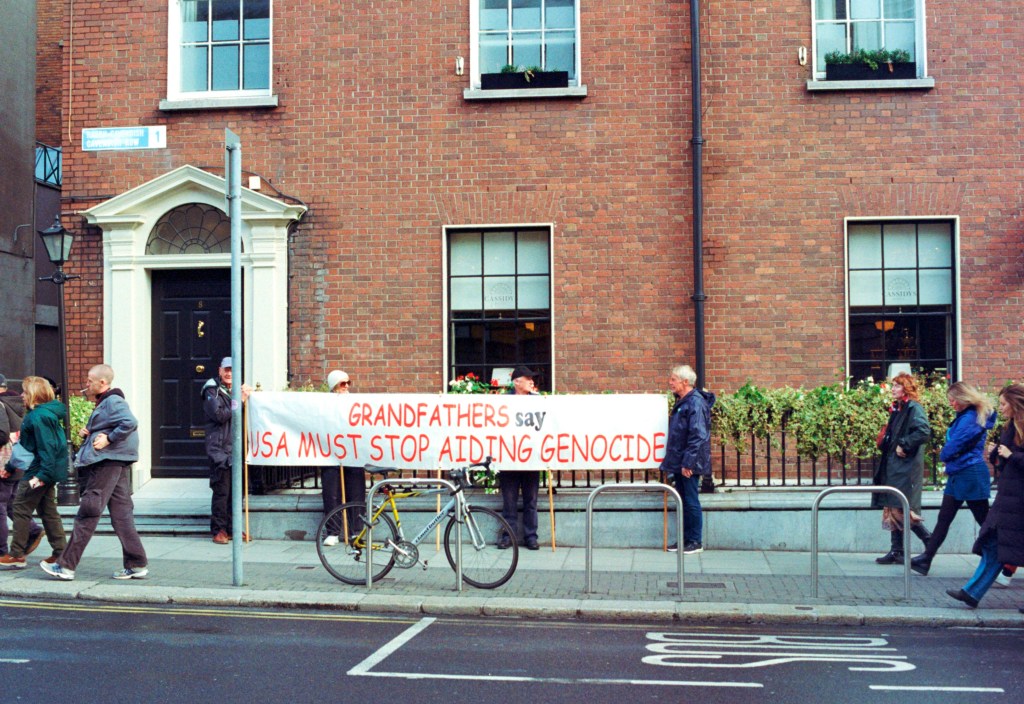
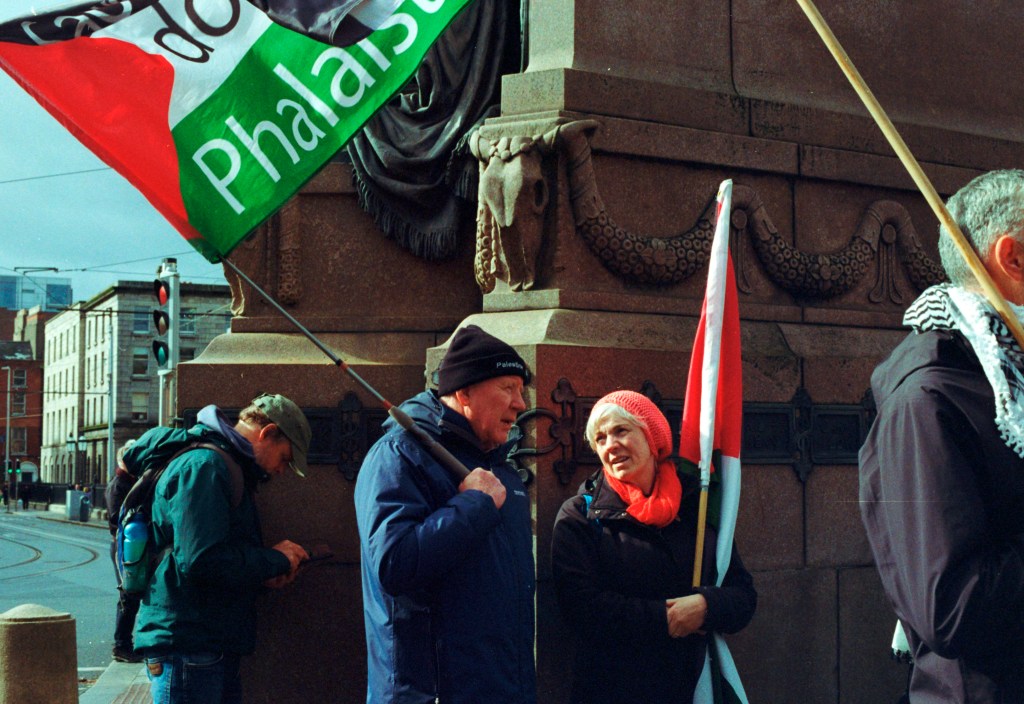
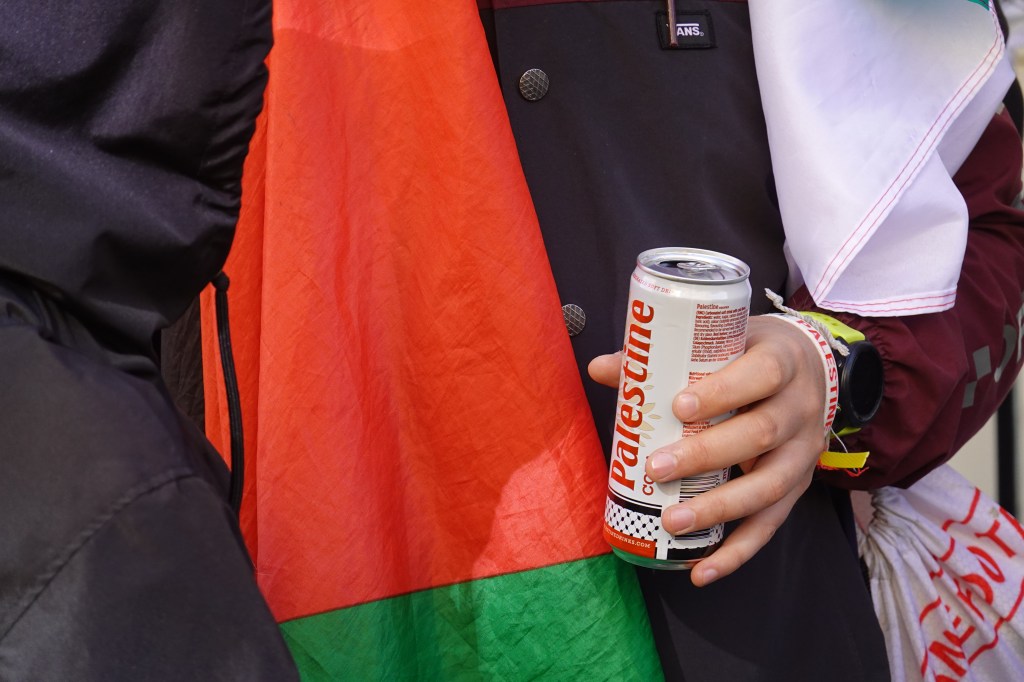
At the Dáil, a small group of about 50 protesters broke off from the main group and began to walk towards Dublin Port. They were unsure as to whether or not to go, and I followed as they marched. The energy had grown uncertain and disorganized, with two men trading fervent insults along Nassau Street. A crowd awaited us at the port, leading chants across from a line of Garda officers. Aside from a briefly mentioned plan to disrupt commercial operations, there no longer seemed to be a clear objective.
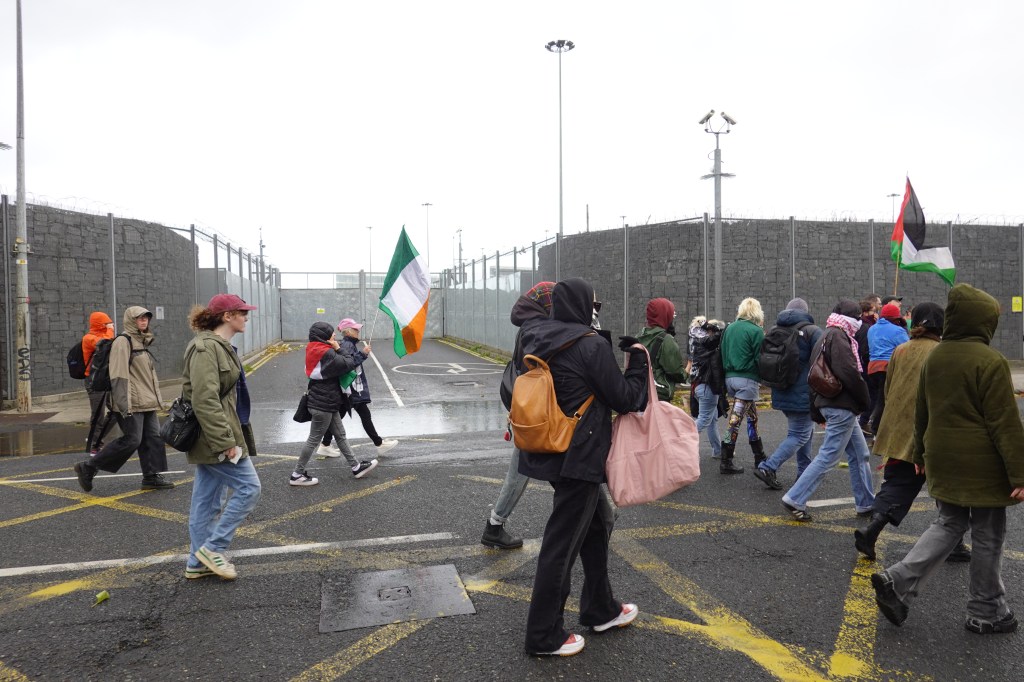
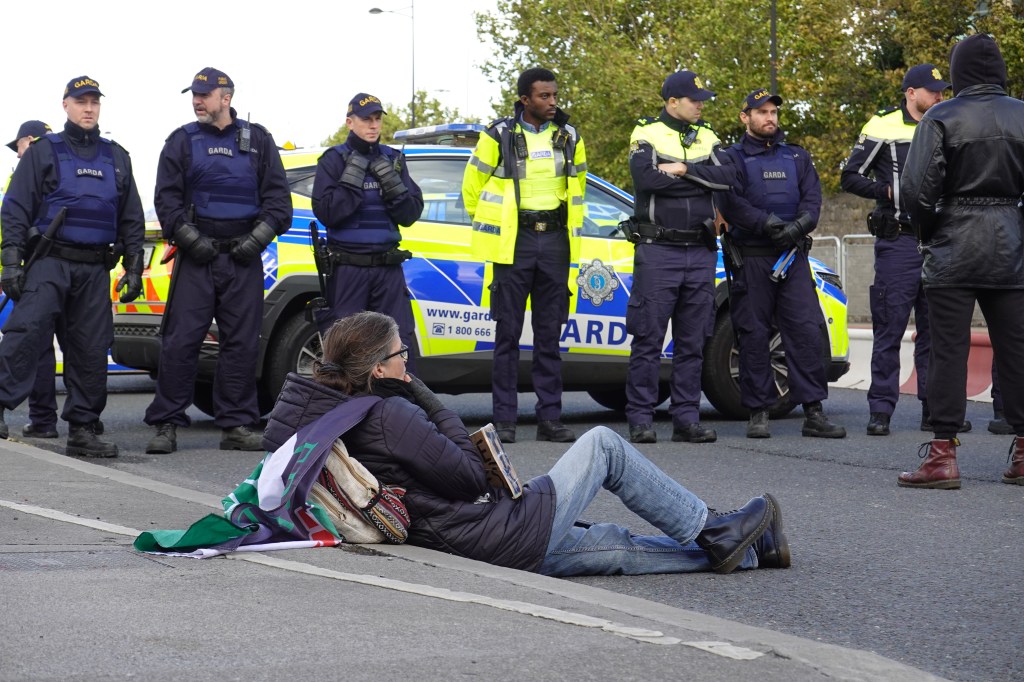
A steady stream of protesters began to march around the block, hoping to approach the garda from a new angle. One after another, people began to leave the demonstration, and by the time the group reached the new line of officers, their numbers were greatly reduced. There was a dangerous disjointedness among those who had convened: if the original protest had been a projection of solidarity, this smaller group was projecting desperation. A few organizers stood in front of the rest, calling for a halt. “This,” they called out, “is what we are going to do: we are going to approach the garda.” Some in the crowd looked calm. Others were confused, lost, or angry. There was no declared intention of passing through the garda barricade.
What makes a protest effective? In some cases, the answer comes in the sheer number of stomping feet, raised voices and waving flags. Even the most vocal support, however, can fall on deaf ears. The inevitable question, then, is that of disruption. In a 2023 survey of 120 academics the majority concluded that peaceful disruption is important for the success of a movement. It is of paramount importance that disruption, then, is peaceful in intent. In the case of Saturday’s protests at Dublin Port, the intentions of the organizers were unclear, even to those who stood behind them.
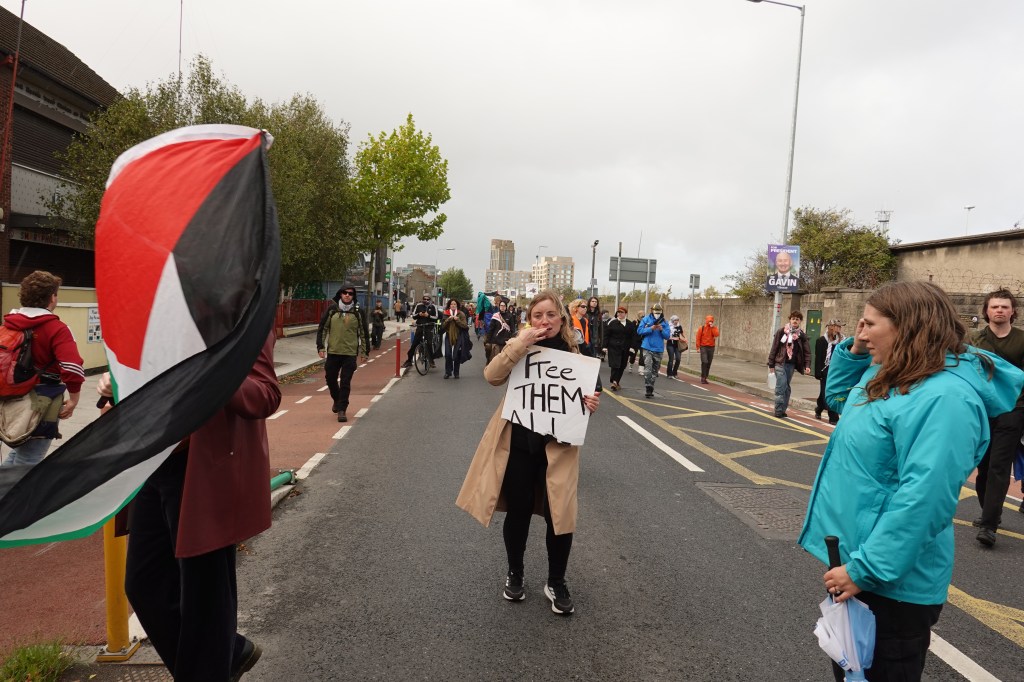
They had arrived at the port, but were blocked. The officers would not let them pass. What, then? Peaceful disruption requires a shared objective among the protesters and on Saturday, the patchwork of emotions shown in that wave of faces was a somber foreshadowing, and sent a pang to my stomach.
In a statement, An Garda Síochána referred to a “co-ordinated effort to physically breach” the cordon. Others claimed that the garda were unprovoked. It was clear to me, watching the scene, that the garda’s use of force was needlessly heavy handed.
Within moments, protesters and garda were face to face. “This is a peaceful protest!” cried someone in the mess, “This is a peaceful protest!” I looked to the line of officers, converging upon men and women like two waves colliding in a furious sea. Two young boys sprinted from the crowd as I watched a garda officer raise his baton and hit a man on the knees and again on his back, repeatedly. Before I could register what was happening, shouting protesters emerged from the scene, clutching their faces, with snot pouring from their noses. A cloud of orange wafted in the air as officers indiscriminately employed incapacitant spray.
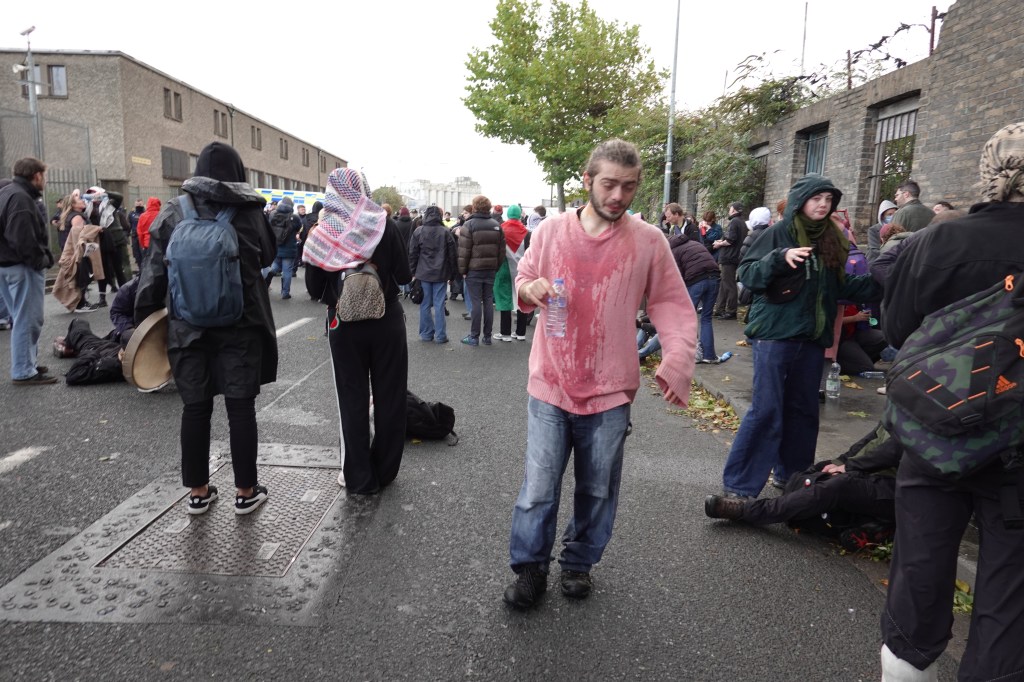
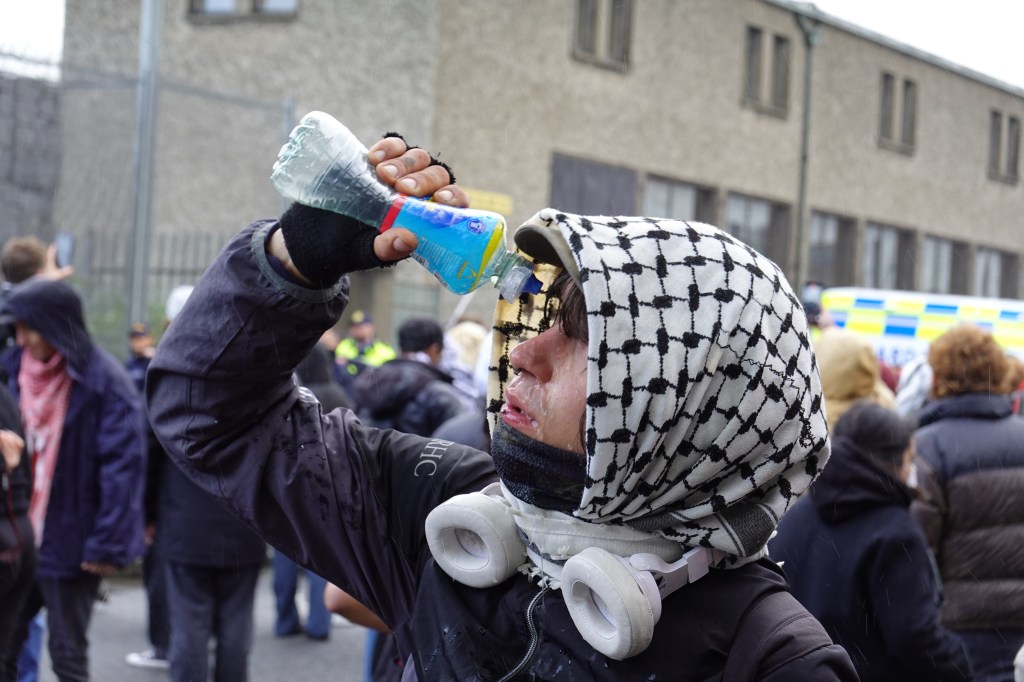
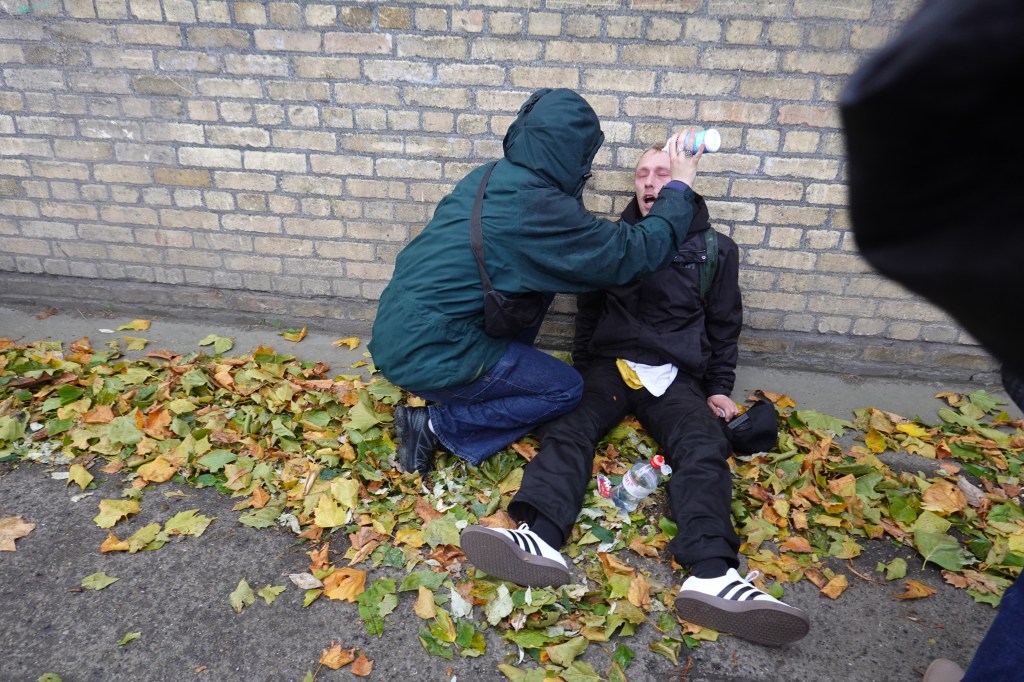
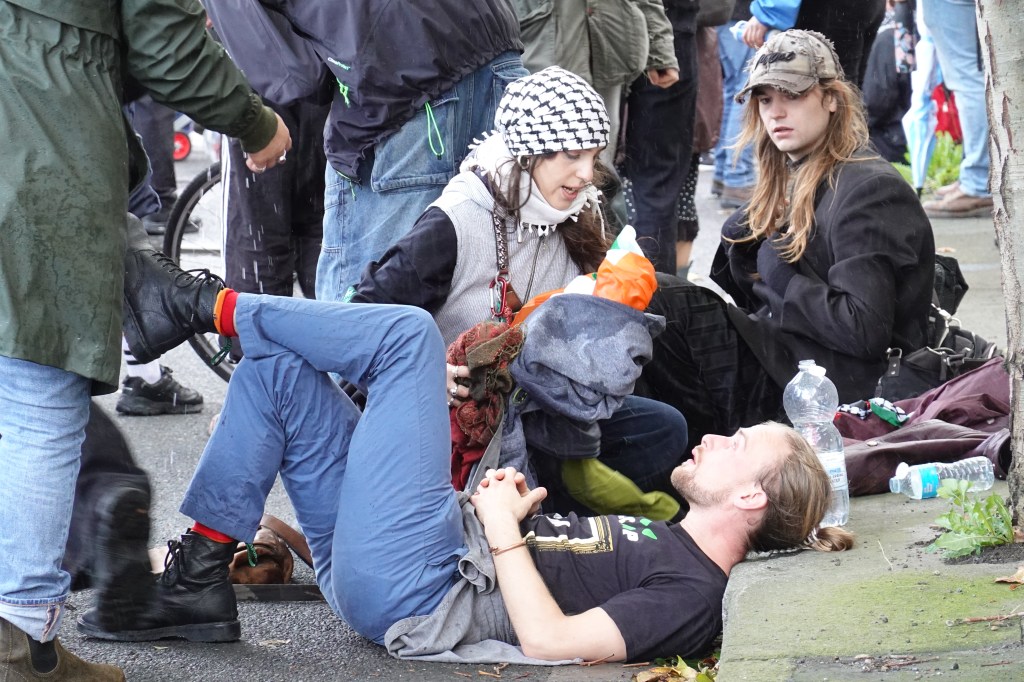
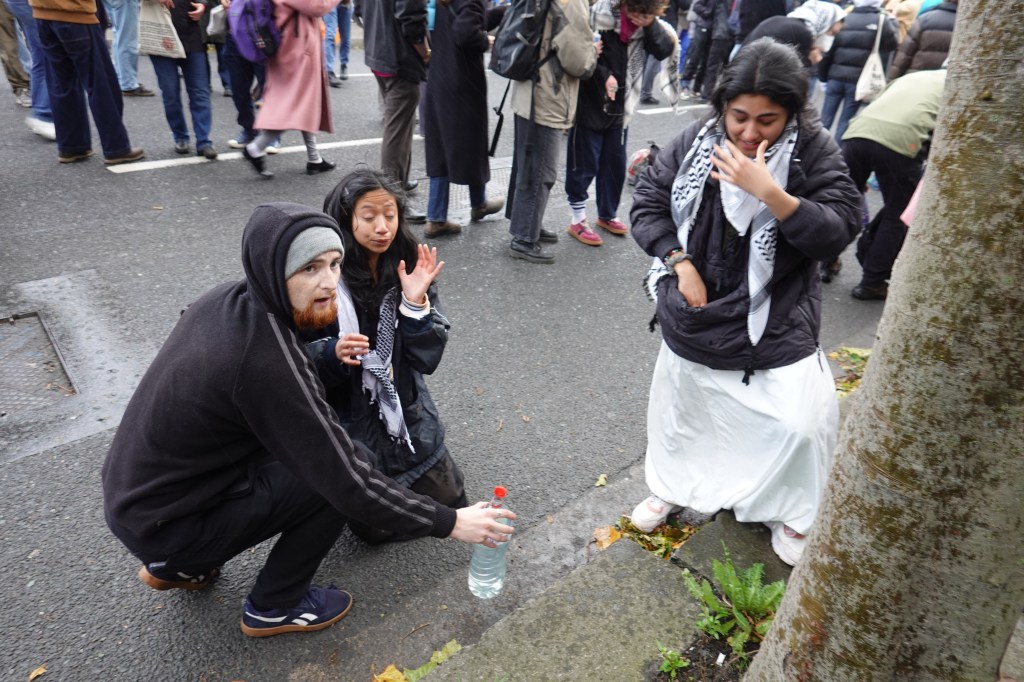
It was only a matter of minutes before the group had dispersed. They could not go far, however, as they were either blinded or were helping others who had been sprayed by the garda. People stumbled, asking for water. Some poured milk into their eyes, dabbing their faces with stained keffiyehs. A group left and reemerged with bottles of water from a nearby convenience store. An organizer, whom I encountered two days later, had yet to recover his voice. His face still showed signs of incapacitant spray. The garda maintained their cordon, holding batons and spray canisters, as the protesters trudged to the bus, the train, home.
 charlie deichman-caswell