The scene could be described in grey-blue layers: flat clouds sat above an expectant, smooth ocean. At the horizon, a few vessels were painted jet-black against the bright sky. Everyone in the boat trained their gaze among those layers and waited. People were restless, chatting with their neighbors about small things and travel stories and Do you get sea sick? Rub your thumb against your palm. It helps.
In the gentle rocking of the vessel, the majority of us had taken nausea medication. Some did not, and I watched as one boy turned his head skyward, eyes wide, before abruptly sinking past his knees and wretching vomit onto the plaster floor.
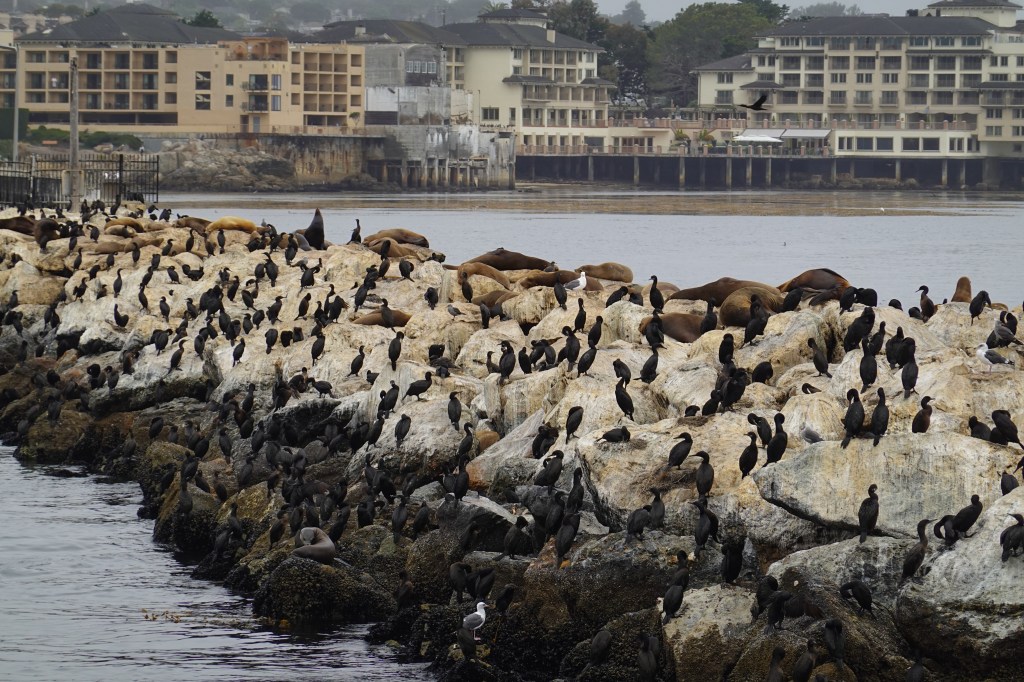
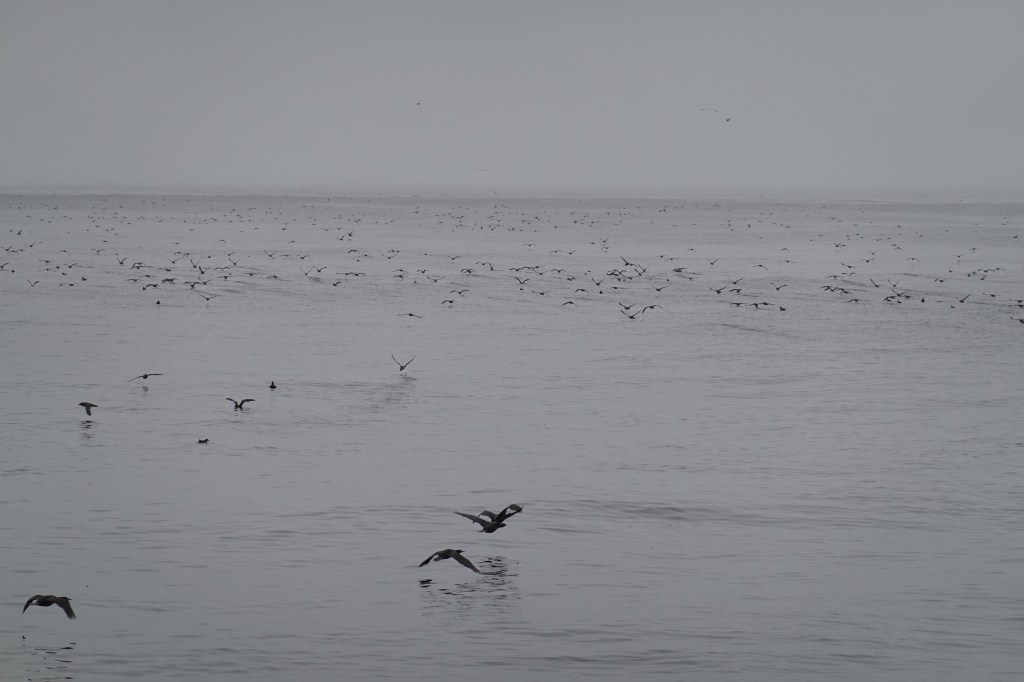
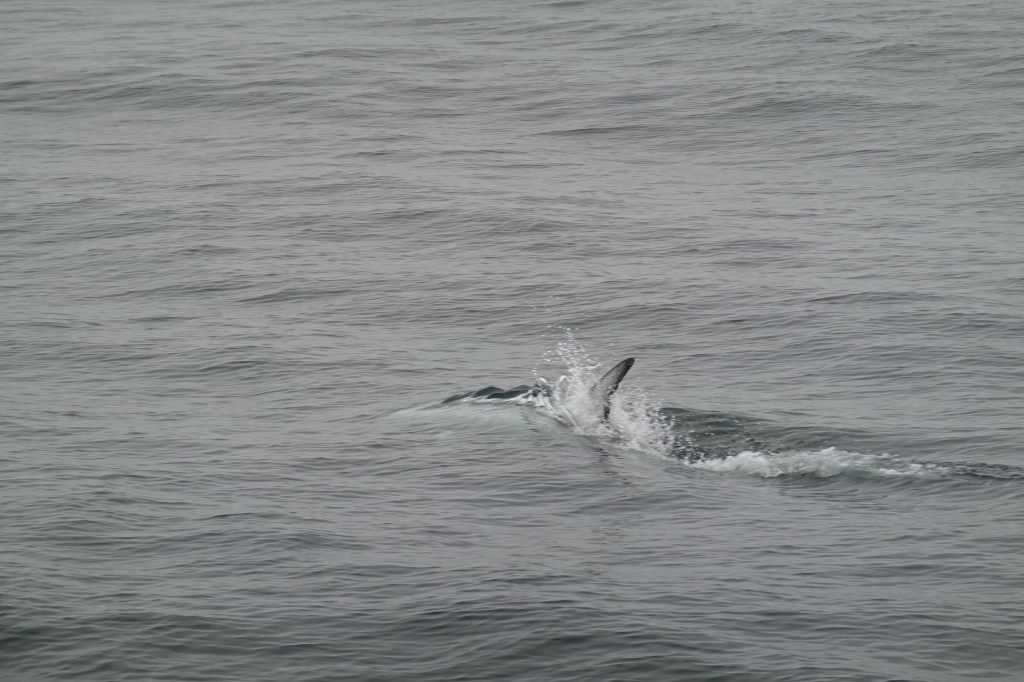
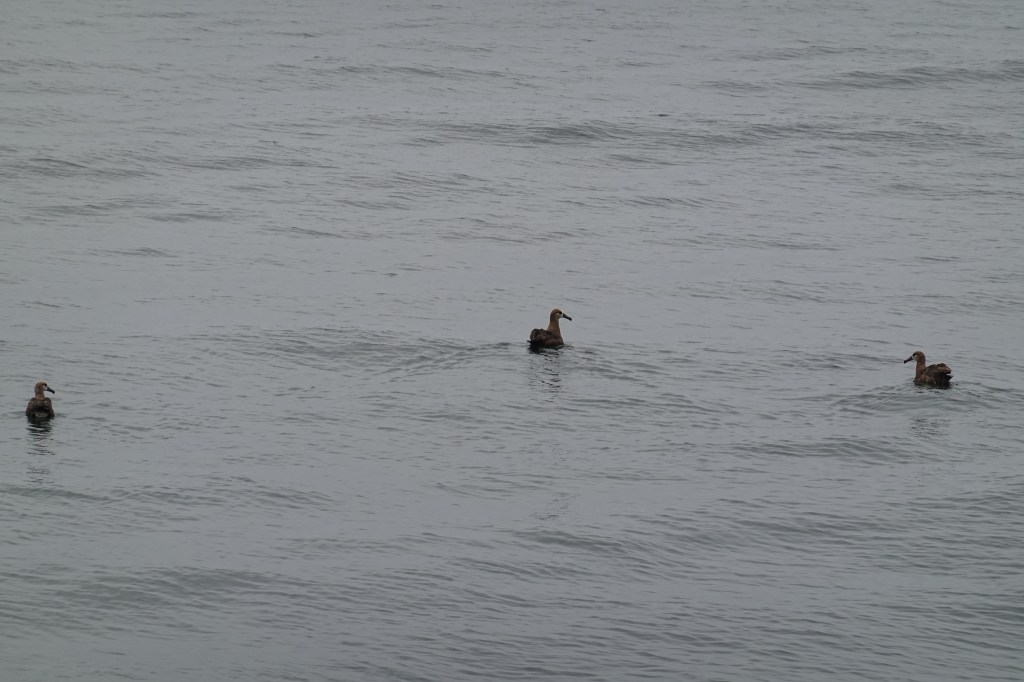
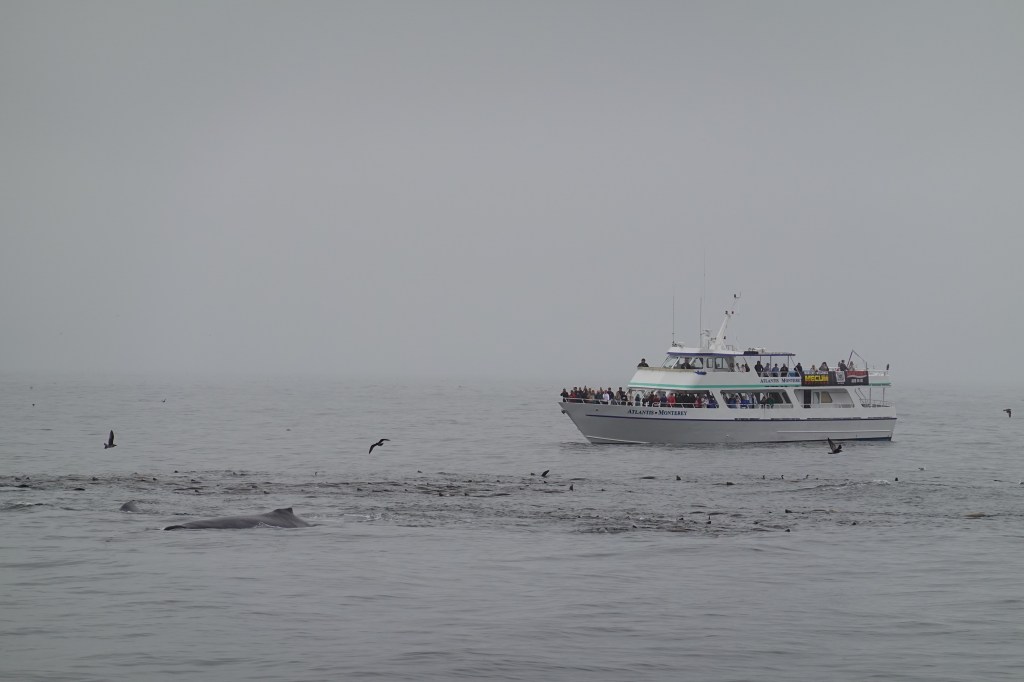
All around us, gulls flew, following the boat – in an instant, we were following them. The flock grew to hundreds, thousands of cawing, soaring, flapping wings. Murres appeared on the water, joined by cormorants and a few pelicans. Minutes later, a pair of sea lions leapt into the air and the child next to me shouted to his parents. Suddenly, we were caught in a flurry of feathers and beaks as we joined a feeding frenzy. Dotting the water were the lazy wings of Sooty Shearwaters, silent, dark fish-feeders whose migration leads them to the shores of Japan, New Zealand, and here, in Monterey. The birds were relentless, and they were leading us to something bigger.
Humpbacks! Ten o’clock.
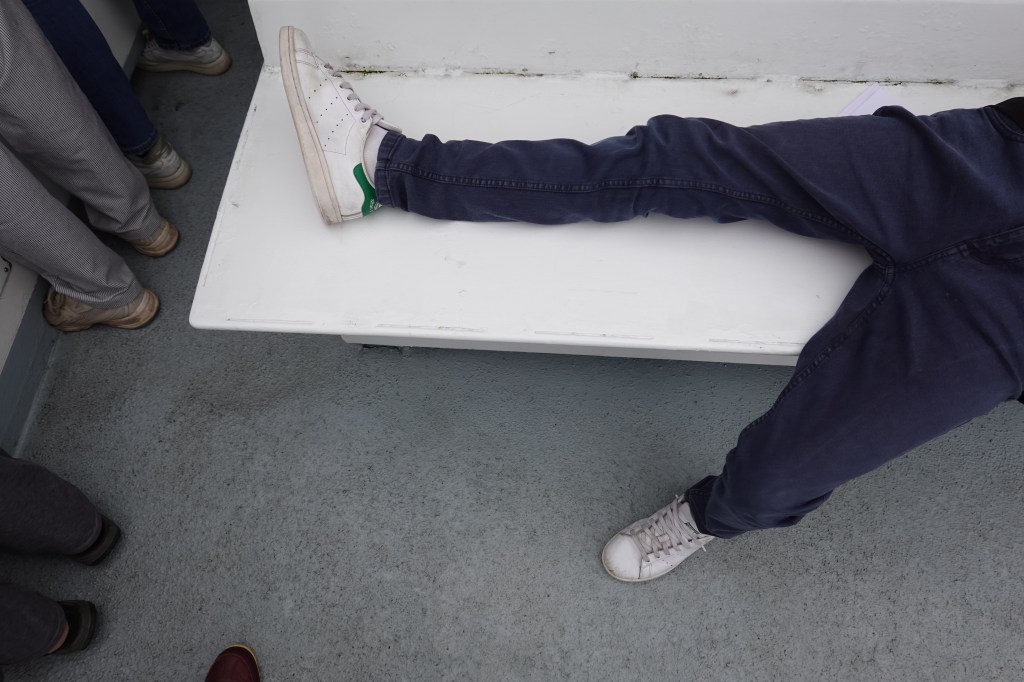
Less than thirty minutes into our journey, two dark shapes bulged at the portside. They rose and sank with a slow rhythm. They’re sleeping, beamed the captain. She explained how Humpback Whales sleep by resting one half of their brain at a time, remaining alert enough to stay alive and to respond to threats. The Frenchman beside me, gazing at the whales’ slick black backs, murmured to his mother: Mais maman, c’est incroyable. Couples leaned over the railing for a better look. A seasick child stayed rooted to his bench, legs dangling onto the floor.
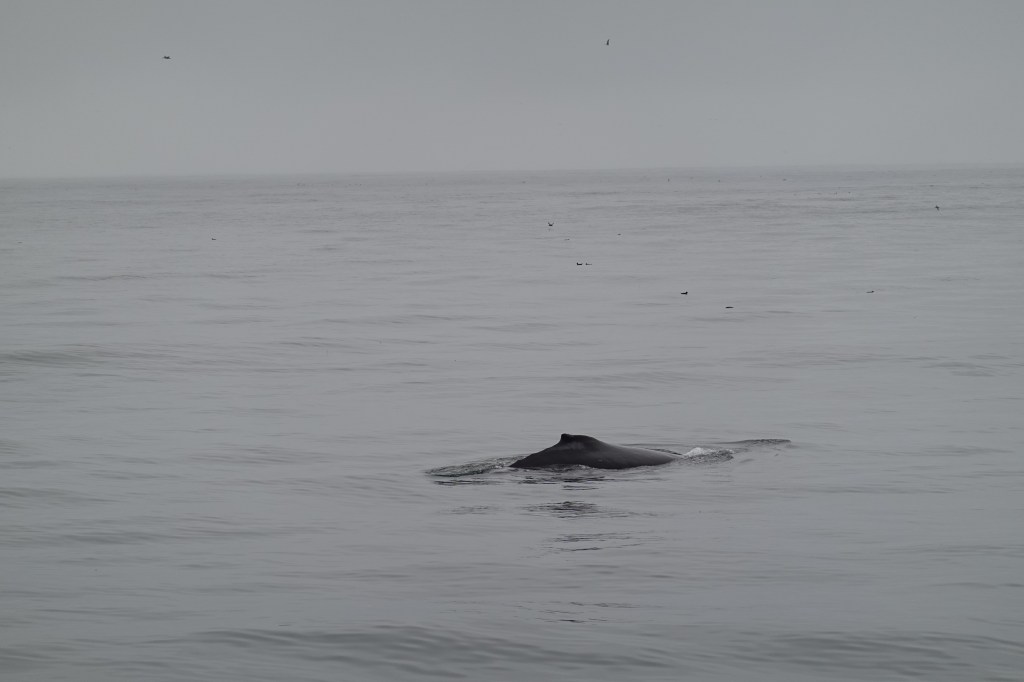

There was a time when Humpbacks faced a bleak future. Prior to the 1985 moratorium on commercial whaling, most global populations had been reduced by more than 95 percent. Today, their numbers are steadily increasing, although populations face constant stress through underwater noise, harassment, vessel strikes, and entanglement in fishing nets. Humpbacks live in 14 distinct population groups and, despite conservation efforts, four populations are listed as endangered and one as threatened. Our own captain, in one instance, called for those aboard to observe a young Humpback who appeared to be dragging fishing gear through the dark waters. There was no need to worry, she explained, and a team of professionals would be dispatched to help the poor thing. This young Humpback swam free.
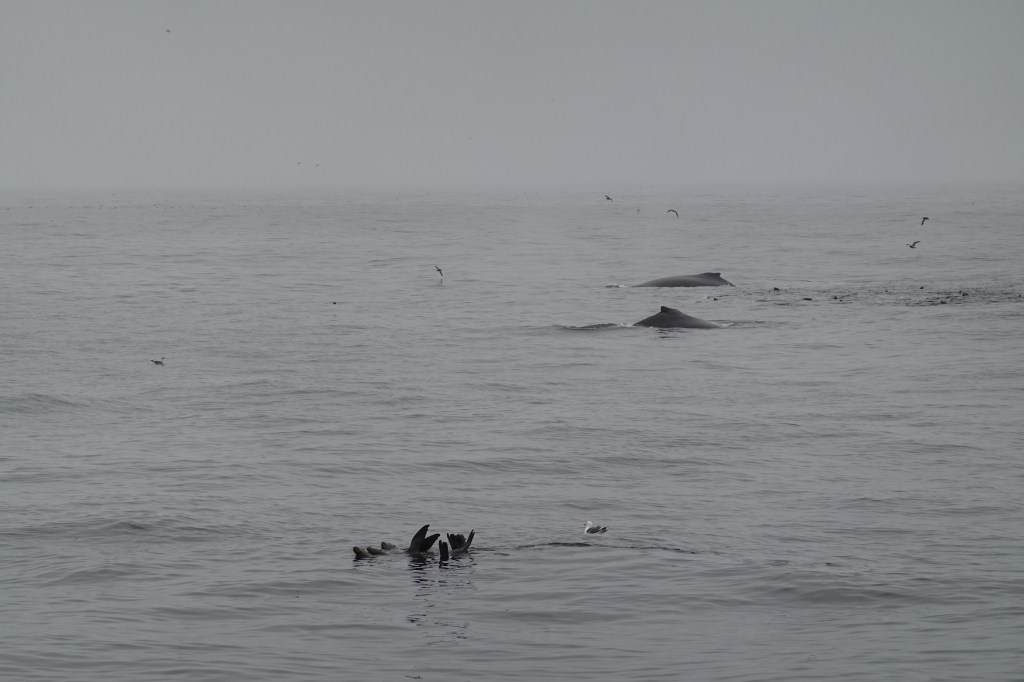
An hour later, we were surrounded on all sides by spouts and flukes. The boat was in the center of a massive cluster of krill and fish, with six Humpbacks lunge-feeding at a time. Shearwaters scoured the surface of the water, while sea lions clustered together, thermo-regulating. The energy was palpable. New boats joined our vessel, crowded with bodies, at times approaching too close to the gentle beasts. Everyone crowded to the starboard railing, mouths agape. Cameras flashed, clicked, whirred. After a moment I put mine in my pocket and watched the scene.
We are only beginning to understand Humpback Whales. Recent studies and observations have shown that Humpbacks will protect their calves, as well as other species, from Orca attacks. In these circumstances, Humpbacks were the intended prey only eleven percent of the time. Researchers have struggled to find a purely biological explanation for their behavior. I thought about Humpbacks, and the question of inter-species empathy, as bubbles formed on the water’s surface.
Suddenly, there was a large sound, like that of a massive wave falling overhead, and a giant Humpback thrust itself out of the water and into the air before us. At first, it was a sleek black shape. Water cascaded from its body and two Oreo-colored fins waved freely through the sky. I caught my breath. A few cameras clicked but most were silently forgotten. Five or six people, standing at the opposite railing, saw nothing. Performing a half-turn, the Humpback reared its white, barnacle-pocked belly and crashed back into the ocean. The moment was over. The ocean was still. I thought of every photograph, every video, every Attenborough utterance, and replaced them with that memory. Around me, people cheered. The whole of us strangers were in awe, and the gleam in my mom’s eyes was made of pure joy as we were swept back to shore.
 charlie deichman-caswell