Prologue: Swifts
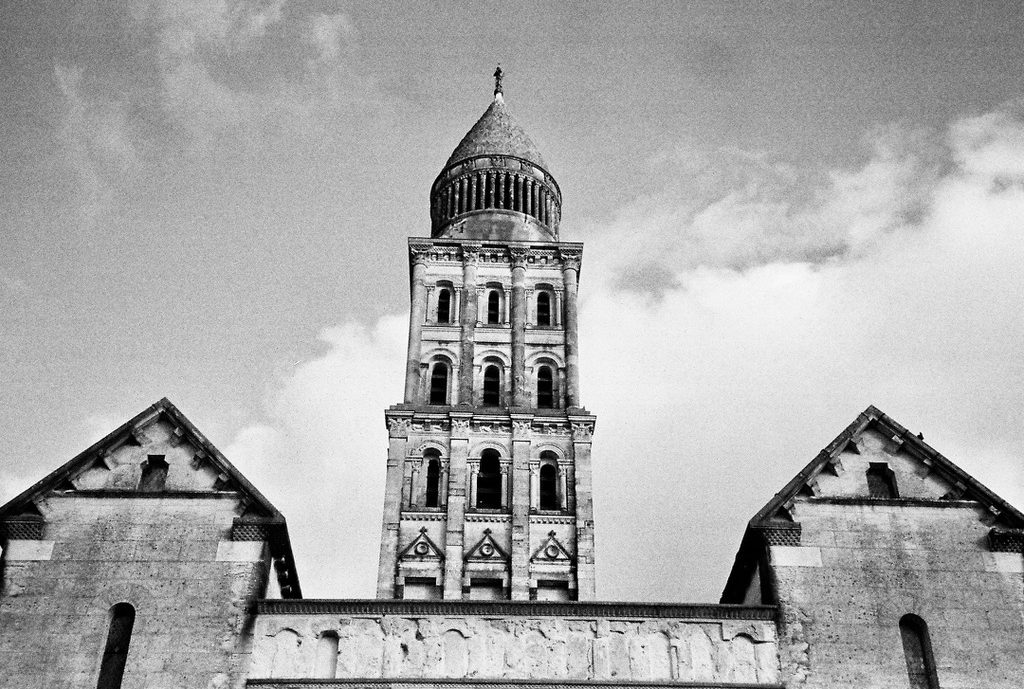
At midmorning and in the late afternoon you could usually spot the swifts flying over the cathedral. They would emerge slowly from their cosy nooks, their nests of week-old hedge clippings tucked within stone walls that have stood for centuries. At first you would spot one, maybe two swifts fluttering in the empty space between the towers, and within minutes the silent air would be filled with the whir of birdsong. They would occupy every breath of wind from the newly-lain stonework of the courtyard to the patch of sky far above the highest tower, and at such a height there was yet no mistaking them, spreading their crescent wings to join the rising moon in a celestial dance. This was every morning and every evening. I got used to their chatter.
The changing of the seasons was marked by their departure – swifts are travelers, flying as far south as the Congo by mid-winter. The now-empty holes in the stonework outside my front door whistled like clenched teeth when the cold gusts announced December’s arrival. The sky turned silent, only to be breached by the occasional chime of church bells. There had been something joyous about the presence of the swifts that mirrored the energy of the city, and when they left it seemed that people talked quieter, hurried more. As a chill took hold the schoolboys postponed their regular soccer matches and the older folk hobbled from their warm homes, bundled in wool, only briefly, only to take in the fresh air. The city turned in on itself.
It was late March when the swifts returned. I was on a morning’s walk to work when I saw shadows dancing across the courtyard. I stopped and watched them for some time. From beneath you could see their throat feathers, white like a snowy beard. Shuffling along the rockface they would draw their wings close to their chest, as one would drape his shoulders in a heavy blanket. The days seemed to get warmer faster after that. Every place has its own unique way of reminding you of winter’s impermanence. This year it was the swifts. The swifts and their childlike playfulness and their white beards which, being so pronounced, cloaked their youth in an ageless wisdom. And it is this wisdom which, at the thought of a returning springtime, brings to mind tangled curtains of Spanish moss and how, in some places, it is called Old Man’s Beard. So too does it rush back into itself at the first hint of spring, and so too does it insist upon a wisdom, a wisdom in the knowing that the cold will abate and the swifts will flock and you, readily you, will administer their welcome.
I. Fall
September 28, 2024
I happened to arrive in Périgueux during an event that was called “la grande fête agricole.” Really, it took place only two days after I arrived. I was still jet lagged from my trip and my suitcases sat fully packed in a temporary Airbnb. After two days I had only met two of my fellow assistants, Aymara, and Emma, and it was our first weekend together. We had no clue what we were expecting, but when we showed up we saw lines of tractors in the main square, interspersed with food trucks and pop-up tents from local vendors. It was a celebration of local agriculture. Late-season strawberries, cuts of beef and local wines from the Bergerac region decorated plates alongside walnuts and truffled slices of bread. During the daytime, a massive tent was erected and hundreds of people gathered underneath it, enjoying the last harvest of the summer.
At some point or another, we saw a sign for something called “la grande tablée,” which promised to be a feast of local produce for the entire town. There were 1000 spots and when we signed up, it was nearly full. That night we were met by a row of tables, stretching the length of the main promenade, swathed in white tablecloth and elegantly set with dishes and utensils. It was around this time when I started to get a very good feeling about Périgueux and, not to mention, I was very hungry. The first course was a soup, tomato based with mushroom, and when I was nearly finished, mopping up my small puddle with a slice of bread, the man next to me showed me the customary method of pouring red wine into what remained and slurping it. There was a buzz in the air and a troop of live musicians played classic American rock hits. The second course came and went, and then the third. We ate sausages and duck and roasted vegetables, and by the time the dishes had been taken away, the table of local farmers seated behind us had taken up a ruckus rendition of a popular workers song. I could not understand the words, but I let the warmth of their voices carry me until the wine and late summer breeze weighted my eyelids.
It wasn’t until two weeks later that I started my job as an assistant English teacher in the local elementary schools. I didn’t have any experience teaching, but I spoke enough French to fit in and was open minded going into the program. After graduation, I had applied to a number of positions and opportunities, and I had landed a spot in a teaching program run by the French government. It would allow me to travel while experiencing a year of living in rural France. Those early months were easy. Two weeks into work we were given another two weeks of vacation. Summer was giving way to fall and as the chestnut leaves grew orange and fell into the Île, floating beneath the bridges at the outskirts of town, I got to know the city. I got to know it’s many plazas and crumbled façades. I familiarized myself with the Voie Verte, the far reaching path that straddles the Île until its nexus with the Dordogne. I met school teachers who introduced me to a soccer coach in Chancelade who, within the first month, offered me a position on his team.
Our job gave us ample free time to travel and join extracurriculars like the climbing gym that I frequented in the fall, but would gradually lose touch with. Aymara and Emma and I remained close, but we branched out. I got closer with Allie and Thomas and Andrea and we took day trips to towns like Sarlat and La-Roque Gageac. The Voie Verte became like a close friend in itself and I knew it well. About two miles down the path you would pass four white horses and I knew them well too. Sometimes there wasn’t much else to do other than walk, and between the walking and the climbing and the soccer I would tire myself out until it felt okay to do nothing at all. Fall arrived in Périgueux much like anywhere else but very much unlike New England, whose fiery oranges and reds had marked my autumns. Still, I learned the shades of the maples and the chestnuts and the oaks and willows of the local country. I moved into a new apartment just one street down from the old cathedral. It, much like most of the other buildings in the old city, had been turned into an Airbnb. The listing was hard to come by. In my room was one of those old brick walls from the original foundation, likely more than five centuries old, and little by little I grew used to my new space.
Around the same time my work started picking up. I had been placed in three separate schools throughout the city, and my students ranged from four years old to ten. In all I taught close to 300 students – I did not come close to learning all of their names. During those fall months the students were full of energy, and so was I. The school year was still new and I was, to some of the kids, the first American that they’d ever met. They were full of questions. Do you know the president? Have you been to New York? How did you learn English? On my first day I joked that I lived in the White House and, when the kids failed to question it, I learned that they would take anything and everything I said to heart. At that age children soak up new information like a sponge. Though I taught some classes as few as three new words per day, they never failed to remember what I had thrown upon them the week prior. Most of my lessons took the form of games: Simon Says, Guess Who?, and other memory games were in constant rotation. I was the fun substitute. Even the angsty ten year-olds, during their post-lunch slump, would perk their heads up at the sound of a new lesson. Before long the kids could introduce themselves, describe themselves and their family members. The days grew shorter and, with each new day, I grew into my role.
 charlie deichman-caswell